Morning or afternoon whale watching in Moorea: which is better?
Morning or afternoon whale watching in Moorea? How sea conditions, the 7:30 a.m. start rule, sunrise trips, ferries and light compare, and which slot to book.
Book the morning boat if the forecast is the same all day. The sea outside Moorea’s reef is often calmer early, before the trade winds build, and that makes the ride easier on anyone prone to seasickness and the swim easier for everyone. What a morning slot does not give you is more whales. Humpbacks surface, rest and dive at all hours, and Moorea Moana Tours, which runs sunrise, midday and afternoon boats, tells its guests that no departure time has better odds. If the afternoon has the better forecast, the better guide or the only free seats, take it.
Most Moorea operators run one trip at about 7 a.m. and a second at about noon, each about four hours long. The Moorea Sea Experience half-day small-group trip is one of them: six guests at most, rated 5.0 from 120+ reviews, from $254 per person, leaving from the Cook’s Bay public landing.
Check Availability
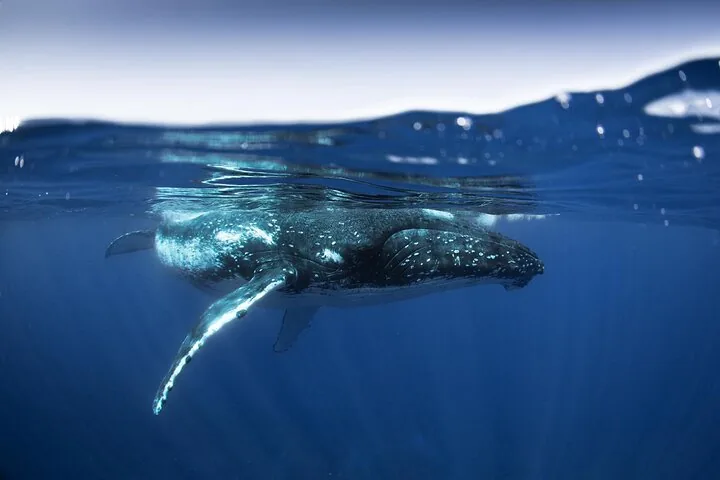
Moorea Half-Day Small-Group Whale Watching (6 Guests)
- 5.0/5 (120+ reviews)
- 4 hours
- Free cancellation
- Operated by Moorea Sea Experience
Includes Half-day boat trip on the open ocean with a guide and captain · Use of snorkeling equipment · Snacks
You'll choose your date and complete the booking on Viator. Free cancellation up to 24 hours before departure.
Morning and afternoon trips compared
| Factor | Morning | Afternoon |
|---|---|---|
| Chance of seeing whales | No proven advantage | No proven disadvantage |
| Sea conditions | Often calmer before the daytime wind builds | Can be windier and choppier |
| Seasickness | Usually the better pick | Depends on the forecast |
| Underwater visibility | Helped by a smoother surface | Can be just as good on a calm day; the sun is higher |
| Photography | Low, warm light; glare when you shoot toward the sun | Light on the island’s peaks from the other side |
| Other boats | You may reach the whales before later boats | Morning boats may still be out |
| Whale swimming | Only inside the 7:30 a.m. to 5:30 p.m. window | Same window |
| Families | Good if the children wake early | Easier after a slow breakfast |
| Day trip from Tahiti | Usually too early to reach after the ferry | Easier to fit around a morning crossing |
| Our pick | Slight preference | A good alternative |
If everything else is equal, book the morning. If the afternoon trip has a better forecast, a more suitable boat or a more experienced guide, book the afternoon and don’t worry that you have missed your best chance. You have not.
Other Experiences
Other experiences you might enjoy
More Moorea whale and lagoon tours, each with its own page and booking link.
1. Are whales more active in the morning or afternoon?
Humpbacks are active day and night. The whales that spend the southern winter around Moorea come to mate, give birth and nurse their calves, and none of that follows a daily peak the way feeding at dawn or dusk does for some animals.
On any trip you might see mothers and calves resting, whales traveling along the coast, males displaying at the surface or a group moving through open water. Possible sightings include:
- Breaching: the whale throws much of its body out of the water.
- Tail fluking: the tail lifts clear of the surface as the whale dives.
- Pectoral slapping: a long flipper strikes the water again and again.
- Spyhopping: the whale lifts its head straight up out of the water.
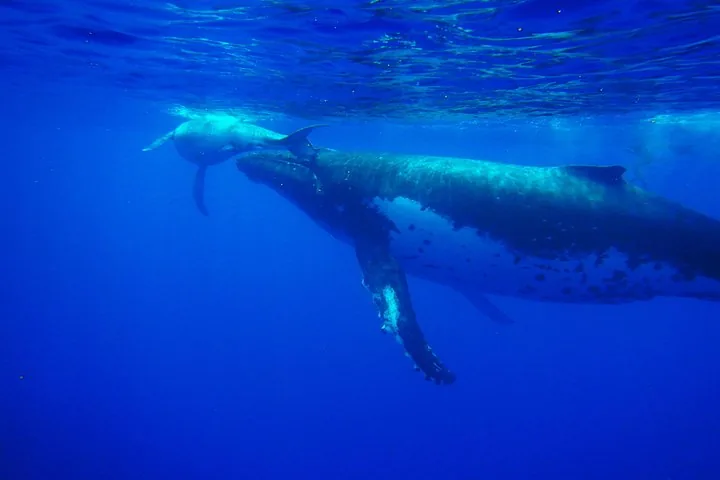
- Mother and calf: a young whale surfaces beside its mother.
- Whale song: males sing underwater, and some guides lower a hydrophone so you can hear it.
None of these happens only in the morning or only in the afternoon.
What does scientific research say?
Humpbacks do change their behavior over the day, but the pattern differs between populations, places and activities. A study of singing humpbacks on a breeding ground found that the singers’ positions and spacing shifted through the day; it says nothing about how many whales a tourist boat off Moorea will see at 8 a.m. against 2 p.m. Another study of humpback calls across the Southern Ocean found that daily patterns differed from one monitoring site to the next.
There is a difference between how a whale behaves and whether you see it. A whale can be close by and still underwater, moving away from shore, or resting quietly where a blow is hard to spot. No public dataset for Moorea shows higher morning sighting rates under comparable conditions.
Be wary of anyone who says the whales are always more active at sunrise. A good operator calls sightings unpredictable and does not attach a percentage to a departure time.
2. Why morning tours can be better for ocean conditions
This is the strongest reason to go early. Moorea’s lagoon is calm and turquoise, but whale tours run only in the open ocean: watching whales in the lagoons, bays and reef passes is banned. Once the boat crosses the reef, the water can be very different.
Morning winds may be lighter
On many days the sea is fairly settled first thing, and the wind and chop build as the land heats up. A calmer outward run is easier on the stomach and makes it easier to follow a whale. Moorea also gets trade winds and ocean swell that have nothing to do with the clock, so a morning trip can still be rough.
Calmer water can help spotting
A smooth surface makes a blow, a dark back or a dorsal fin easier to pick out, for the guide and for you. It also makes it easier to stand, move around the boat and hold a camera steady. Easier spotting is not the same as more whales.
Morning may be preferable for whale swimming
If your trip includes a licensed swim, a calmer sea makes it easier to get in, stay with the group and climb back aboard. Rough water affects boat handling, how well the guide can watch the swimmers, visibility and how hard you have to work. An early trip still gives no promise of a swim: the guide decides on the day from the sea and the whale’s behavior.
The rule we use: if the forecast shows lighter wind and smaller seas in the morning, take the morning. If the day looks the same from start to finish, choose on the operator and your own plans. Our guide to how to swim with whales in Moorea covers the swim itself.
3. Is afternoon whale watching in Moorea worth it?
Yes. The afternoon boats go to the same water, looking for the same whales, and nothing suggests the whales go quiet after lunch. An afternoon trip often suits you better if you hate early starts, are coming over from Tahiti that morning or want breakfast without watching the clock.
Advantages of an afternoon departure
- An easier start: time for breakfast, a slow morning and the drive to the meeting point.
- Easier for ferry passengers: arriving from Papeete and joining a noon boat is more realistic than making a 7 a.m. one.
- Seats when the morning is full: small-group boats sell out in August, September and October, and the afternoon slot is often the one still open.
- Good light: depending on where the boat is, the afternoon sun can light the whales and the island’s peaks from a different side.
The main disadvantage
The wind and chop are often stronger in the afternoon, once the daytime breeze has built. If boats make you queasy, take that into account. The afternoon is not always rough, though: a settled day can stay calm until evening, and a windy morning can be worse than a calm afternoon. Ask the operator what the sea is like outside the reef.
4. What about sunrise whale watching tours?
A sunrise trip is a different outing from an ordinary morning one. Moorea Moana Tours, for example, sells a sunrise slot alongside its midday and afternoon boats; the Moorea Moana Tours whale swim is rated 4.8 from 70+ reviews and starts at $393, with a wetsuit and hotel pickup included (our breakdown). Your booking confirmation gives the exact start time.
Why do people book sunrise tours?
- The light: watching Moorea’s peaks come out of the dawn from the open ocean is worth the alarm clock for many people.
- A head start: the captain can begin looking for whales before the later boats are out.
- Access: operators can use the early hours to plan around the limit on how many boats may be near one group of whales.
Does leaving earlier mean getting closer to whales?
No. Whale watching is allowed only from 7:30 a.m. to 5:30 p.m. A boat may leave the dock earlier, but nobody may watch or swim with whales before 7:30 a.m., and the rules still cap the number of licensed boats around one group of whales at three. An early start can help with planning on some days. It does not guarantee an encounter or put anyone ahead of the whales’ welfare.
Is sunrise worth paying more for?
It can be, if you want the early light, the chance of calmer water and a longer morning at sea. We would not pay much extra because a listing claims better sighting odds at dawn.
Best for: early risers, photographers and anyone who enjoys being on the water as the sun comes up.
Less suited to: young children who struggle with early starts, travelers with a long drive to the meeting point, and anyone expecting to be in the water with whales before 7:30 a.m.
5. What times do Moorea whale tours actually depart?
Schedules differ between operators. Many run two shared departures a day, some run three, and private boats set their own times. These are the published times we could check in November 2026:
| Operator | Morning | Afternoon or later | Length | Leaves from |
|---|---|---|---|---|
| Moorea Sea Experience | About 7 a.m. | About noon | 4 hours | Cook’s Bay public landing |
| Moorea Reo Tours (Tohora Tour) | 7 a.m. to 11 a.m. | Noon to 4 p.m. | Shared half day | Marina de Vaiare |
| Moorea Moana Tours | Sunrise and midday slots | Afternoon slot | About 4 hours | Given on your booking |
These are published examples and do not show live availability. Times change with the season, the weather and the rules, so confirm yours when you book.
Departure time is also not the time you first see a whale. The boat has to run out to open water, search, and sometimes wait for a turn near a group of whales that already has three boats around it. Some trips spend hours at sea without finding conditions safe for a swim. That is normal on a well-run wildlife trip and no sign of poor organization.
6. Does the time of day affect your chance of swimming with whales?
A little, and only through the sea and the logistics; nothing predictable about the whales changes it. A whale swim in Moorea is a licensed wildlife encounter and a different thing from a snorkel trip. A captain can find a whale and still keep everyone on board because it is traveling fast, seems disturbed or is guarding its calf. Even with a calm whale, wind, waves, visibility or a swimmer’s ability can rule out a swim.
Three things must align
- The whales must be found. Nobody can promise the captain will find them on your trip.
- The sea must be safe for the swim and for the people in the group.
- The encounter must follow the rules: the distances, the limits on boats and swimmers, and the whale’s behavior.
A calm morning helps with the second point on some days. It does nothing for the other two.
Important 2026 regulations
French Polynesia’s whale-watching rules, as the maritime authority restated them at the start of the 2026 season:
| Rule | 2026 requirement |
|---|---|
| Season | July 20 to November 20 |
| Whale watching hours | 7:30 a.m. to 5:30 p.m. |
| Boats | No boat within 100 meters of a whale |
| Observation zone | Within 300 meters, only licensed professional boats |
| Boats per group of whales | No more than three licensed boats in the zone |
| Swimmers | Stay 15 meters from the whale |
| People in the water | No more than seven per boat, guide included |
| Lagoons, bays and reef passes | Whale watching banned |
Check the rules again before you book for 2027, because licenses and operating conditions can change. An early departure cannot buy a closer approach or more time with the whales. Choose an operator that explains these limits plainly. Our page on swimming with whales in Moorea lists the boats that offer a swim.
7. Is morning or afternoon better for underwater visibility?
A smooth morning surface helps, but the clock alone does not decide how far you can see underwater. These matter more:
- Wind and waves: a choppy surface makes snorkeling harder.
- Particles in the water: clarity changes with currents and weather.
- Sun angle: a higher sun lights the water better, though glare and direction count too.
- Ocean swell: a big swell can make a swim unsafe even when the wind is light.
- Cloud: an overcast sky cuts the light underwater.
Here the times trade off. A morning trip may have the calmer surface, while the sun around midday is higher and lights the water from above. On a clear, calm day an afternoon trip can give better underwater views than a windy morning.
What if you want to photograph whales underwater?
Put visibility, a safe entry and a guide used to working with photographers ahead of the departure time. For whale photos, where the whale is, the light and the distance matter far more than morning or afternoon. Flash and anything else that could disturb a whale is off limits, and a camera is never a reason to get closer than the rules allow.
8. Which departure is better for photography?
Neither wins every time. The light changes as the boat moves around the island, and the whales turn up where they turn up.
Morning photography
Early light is warm and low. When the sun is behind a blow or a breach, the spray lights up, and a low sun gives strong silhouettes. Shooting toward the sun also puts glare on the water, which makes a dark whale hard to expose.
Afternoon photography
Afternoon light gives good contrast and falls on Moorea’s peaks from the other side. Later in the afternoon the colors warm up and silhouettes return. If the afternoon breeze has raised a chop, sharp shots from a moving boat get harder.
Practical photography tips
- A fast shutter speed matters more than the departure time: about 1/1000 second or faster freezes a breach, if there is enough light.
- Bring a telephoto zoom, because whale watching happens at a distance.
- On a phone, use burst mode when the action starts, avoid heavy digital zoom and keep salt spray off the lens.
Our pick: morning for the steadier boat, either time for the whales themselves. Choose on the forecast and the direction of the light.
9. Morning or afternoon for families, beginners and seasick travelers?
| Traveler | Our pick | Why |
|---|---|---|
| First-time whale watcher | Morning | A calmer sea is an easier start |
| Prone to seasickness | Morning, if the forecast agrees | Often less wind chop |
| Confident open-water swimmer | Either | The sea and the operator matter more |
| Family with young children | A short trip at a time that suits them | Tired children enjoy nothing; see family whale watching in Moorea |
| Underwater photographer | Either | Light, visibility and conditions matter most |
| Staying on Tahiti | An afternoon Moorea boat, or a Tahiti boat | Easier around the ferry |
| Early riser | Sunrise or morning | The light and often a calmer sea |
| Tight schedule | The most convenient reliable slot | Fewer transfers, less to go wrong |
Families with children
For children, the boat’s size, the trip’s length, shade, life jackets and the minimum age matter more than the departure time. If a 6 a.m. wake-up will leave a child tired and miserable, the afternoon trip will be the better day out. Ask whether children can join the specific tour, and whether they can stay on board while others swim.
Travelers worried about seasickness
An early trip is the sensible first choice, but check the swell forecast as well as the wind: a big swell rolls through the morning just as it does the afternoon. If you are very sensitive, tell the operator when you book and ask what kind of boat they use. Take your seasickness tablet before you board.
People who aren’t strong swimmers
Book a boat-only trip. Seeing a whale breach, or a calf come up beside its mother, from the deck is one of the best things you can do on Moorea, and it does not need a swim.
10. What if you’re visiting Moorea on a day trip from Tahiti?
Then the afternoon departure is usually the one that works. The ferry from Papeete to Moorea takes about 25 to 45 minutes depending on the ship, and you still have to reach the Papeete terminal, board, land at Vaiare and get to the whale boat’s meeting point. A 7 a.m. boat on the far side of the island is very hard to reach the same morning. A noon boat can work if the ferry and the drive leave enough time. The Native Mozcean watch-or-swim trip leaves from the marina at Vaiare, next to the ferry port, from $180 per person (4.7 from 25+ reviews), and Moorea Reo Tours also leaves from Marina de Vaiare.
An example day-trip plan
| Time of day | What you do |
|---|---|
| Early morning | Ferry from Papeete to Moorea |
| Morning | Transfer to the meeting point; breakfast or a short stop if there is time |
| Around noon | Join a prebooked afternoon whale trip |
| Late afternoon | Back at the marina |
| Evening | Ferry back to Tahiti, if a sailing is still running |
Adapt this plan to your own times. An afternoon trip that ends at 4 p.m. can miss some return ferries, so check both crossings and the tour’s real finish time before you book. For more room, spend a night on Moorea or book a boat from Tahiti itself; our page on whale watching in Tahiti or Moorea compares the two, and the Moorea day trip from Tahiti guide covers the rest of the day.
11. Does the month matter more than the time of day?
Yes. Picking the right month matters far more than picking 8 a.m. or 1 p.m. The humpbacks spend the southern winter around French Polynesia, and tours run from July 20 to November 20.
| Month | Whale watching outlook |
|---|---|
| July | Early season; licensed tours start on July 20 |
| August | The season is under way |
| September | A strong month to plan around |
| October | Another strong month |
| November | Late season; licensed tours stop on November 20 |
| December to June | Outside the whale season |
September and October are the months we would build a whale trip around, though no month guarantees a sighting. If your dates are already fixed, there is no reason to rearrange the trip to get a morning slot rather than an afternoon one. Our guide to the best time to see whales in Moorea goes through the season month by month.
12. How to choose between two whale watching tours
This is where we would spend most of the comparing. Picture a cheap morning trip on a full boat against an afternoon trip that costs a little more, with a small group, an experienced guide and a clear cancellation policy. The afternoon trip is the better buy. The departure time is one detail among several.
Check these six details before booking
- License: is the operator licensed for whale watching, or for swimming, on your dates?
- Group size: how many people are on the boat, and how many can go in the water at once?
- Meeting point: how far is it from your hotel or the ferry?
- Length: how long is the trip in total, including the run out and the briefing?
- Swimming: is a swim offered, and what happens if conditions rule it out?
- Cancellation: what happens if the sea is unsafe or no whales are found?
How much should you pay?
On this site, shared half-day whale trips in Moorea start at $180 for the Native Mozcean boat from Vaiare and run to $393 for the Moorea Moana Tours swim; the six-guest Moorea Sea Experience trip is $254. Moorea Reo Tours publishes its shared Tohora Tour at 25,000 XPF per person on Tahiti Tourisme. Our guide to what a whale swim in Moorea costs compares every boat.
Morning and afternoon versions of the same trip usually cost the same. Sunrise, private and specialist trips can be priced differently. Don’t pay extra for sunrise because someone says the whales are easier to find then; pay for better guiding, a smaller group, sound equipment and clear policies.
13. Our recommended booking strategy
- Go in the season. August, September and October all work.
- Start with the morning slot. The chance of a calmer sea makes it the sensible default, especially on a first trip.
- Watch the forecast. Wind and swell matter more than the time on your ticket.
- Book early in your stay. If the trip is cancelled for weather, you have another day to try.
- Don’t judge the day by the swim alone. A whale seen from the deck is a great day out.
- Choose a licensed, careful operator. The whale’s welfare and your safety come before any photo.
And if the only seats left are in the afternoon? Book them, as long as the operator and the forecast look good. The whales will be just as worth seeing. Our guide to which Moorea whale tour is right for you compares every boat on the island.
Frequently asked questions
What is the best time of day to see whales in Moorea?
Morning is our usual pick, because the sea is often calmer before the daytime wind builds. There is no reliable evidence that humpbacks are easier to see or more active on morning trips.
Are whales more active in the morning?
Not necessarily. Humpbacks are active day and night, and their daily patterns vary by place and by what the whales are doing. An early start does not guarantee more breaches or more sightings.
Is afternoon whale watching worth it in Moorea?
Yes. An afternoon trip goes to the same water and can be just as good as a morning one. The main thing to check is whether the wind is forecast to pick up later in the day.
Are sunrise whale tours better?
They give you dawn light and an early start, with no guarantee of whales. Whale watching is allowed only from 7:30 a.m., even if the boat leaves the dock earlier.
What time do Moorea whale watching tours leave?
Many leave at about 7 a.m. and about noon, and each trip lasts about four hours. Some operators also run sunrise and midday slots. Check the exact time on your booking.
Can you swim with whales in the afternoon?
Yes. A licensed afternoon trip can include a swim if the whale’s behavior and the sea allow it, the same as in the morning, as long as the swim ends by 5:30 p.m.
Does wind make afternoon whale watching worse?
It can. The daytime breeze often raises a chop, but wind and swell change from day to day, and a calm afternoon beats a rough morning.
Which departure is best for people who get seasick?
Start with the morning, then check the actual forecast and ask about the boat. A big ocean swell affects every departure.
Are morning whale tours more crowded?
Not necessarily. The number of passengers depends on the boat, and the rules allow no more than three licensed boats near one group of whales. A morning boat may reach the whales before others, but that is not guaranteed.
How long does a typical whale watching tour last?
Most Moorea whale trips last three to four hours. Private and specialist trips can run longer. Check whether the time includes the briefing and the run out to open water.
Is morning or afternoon better for children?
Pick the time that suits your children’s energy and a boat with shade, life jackets and a short trip. For some families a short afternoon trip beats a very early start.
What if no whales are seen?
It depends on the operator. Some offer another trip or a partial refund, others offer nothing. Read the terms before you book.
Ready to book? Check the date picker above for the Moorea Sea Experience trip, or compare every boat in which Moorea whale tour is right for you.
Look for Humpbacks With Six Guests on Board
Free cancellation up to 24 hours before. Moorea Half-Day Small-Group Whale Watching (6 Guests) from $254 per person.
Check Availability & Book