Moorea island, French Polynesia: the complete travel guide
Plan a trip to Moorea: the ferry from Tahiti, where to stay, beaches, whale season, lagoon tours, getting around, costs and how many days you need.
Moorea sits 17 kilometers across the water from Tahiti, a 25 to 45 minute ferry ride from Papeete, and it is one of the easiest islands in French Polynesia to explore on your own. Give it at least three nights: one day on the lagoon, one day driving the island, and from 20 July to 20 November a separate morning for whale watching. Leave a spare day in case the sea cancels a boat trip.
If you book one water trip, make it the lagoon. The Moorea Lagoon and Reef Snorkeling Tour with Drinks leaves from Tiahura on the north coast for four hours with reef sharks, turtles and rays (4.9 from 159 reviews, from $114 per person).
Check Availability
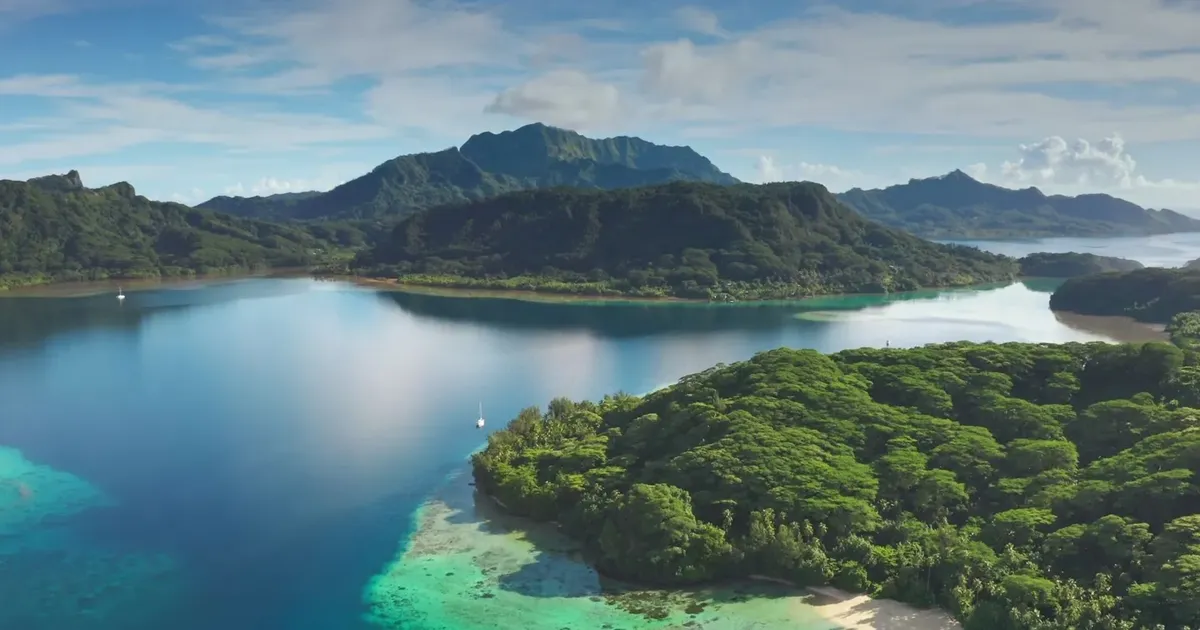
Moorea at a glance
| Location | Society Islands, French Polynesia, South Pacific |
| Distance from Tahiti | About 17 km across the channel |
| Getting there | Ferry from Papeete, or a short domestic flight |
| Ferry crossing | About 25 to 45 minutes, depending on the ship |
| Coast road | About 60 km around the island |
| Drier months | May to October |
| Whale-watching season | 20 July to 20 November (regulated approach season) |
| Length of stay | 3 to 5 nights for most first visits |
| Currency | CFP franc (XPF) |
| Languages | French and Tahitian; English in most hotels and tour companies |
| Known for | Humpback whales, the lagoon, snorkeling, steep green peaks and overwater bungalows |
Moorea has the turquoise lagoon, the palms and the overwater bungalows, and behind them deep-green volcanic mountains, two bays, family-run restaurants, pineapple fields and hiking trails. You can visit for a day from Tahiti, but you see far more of it if you sleep on the island.
More trips around the island, live from GetYourGuide: lagoon snorkels from Tiahura, 4WD rides up the Opunohu Valley, kayaks on the Hauru lagoon and whale boats from Moorea and Papeete.
Other Experiences
Other experiences you might enjoy
More Moorea whale and lagoon tours, each with its own page and booking link.
Where is Moorea Island?
Moorea lies in the South Pacific, northwest of Tahiti, in French Polynesia’s Society Islands. Both islands belong to the Windward Islands group.
Tahiti has the international airport, the capital Papeete and most of the territory’s business. Moorea is smaller and quieter, and its life runs along the coastal villages, beaches and outdoor sights.
The shape you will recognize from photos is the pair of deep bays on the north coast, Cook’s Bay and Opunohu Bay, with Mount Rotui standing between them.
Moorea is volcanic. Jagged ridges rise above green valleys, and a barrier reef shelters most of the coast, which makes the shallow turquoise lagoon visitors come to swim in. Unlike a flat coral atoll, you get mountain scenery and easy beaches on the same island.
Is Moorea worth visiting?
Yes, especially if you want more than a hotel and a beach. Moorea has much of the scenery people picture when they think of Bora Bora, and you can explore it on your own: rent a car, use the public beaches, eat at local snack restaurants and book tours without relying on a resort.
It suits:
- Ocean and wildlife lovers: lagoon snorkeling, reef fish, rays, sharks, dolphins and humpback whales in season.
- Couples: sunset boat trips, beachfront restaurants and overwater rooms.
- Families: sheltered lagoon areas, easy beaches, short scenic drives and guided trips.
- Active travelers: hiking, kayaking, quad rides and 4WD trips.
- Independent travelers: simple ferry connections and one coast road linking most villages.
Moorea is a poor fit if you want nightlife, big shopping streets or reliable public transport.
Moorea vs Bora Bora: which is better?
They suit different holidays.
| Moorea | Bora Bora | |
|---|---|---|
| Best for | Activities, independent exploring, wildlife | Luxury resorts, the classic lagoon view |
| Access from Tahiti | Ferry | Usually a domestic flight |
| Exploring on your own | Straightforward | Possible, but many stays center on the resort |
| Beaches and snorkeling | Excellent | Excellent |
| Hiking and inland scenery | A main attraction | Fewer options for visitors |
| Whale watching | A strong seasonal draw | Rarely the reason people go |
| Accommodation | Guesthouses to luxury resorts | Mostly upscale resorts |
Pick Moorea for a first trip built on exploring, snorkeling and marine wildlife. Pick Bora Bora if an overwater bungalow is the main event. With the time and budget, the two work well together.
Best things to do in Moorea
Moorea is small, but the things to do split into two groups: time on the water and time in the mountains.
1. Go whale watching during humpback whale season
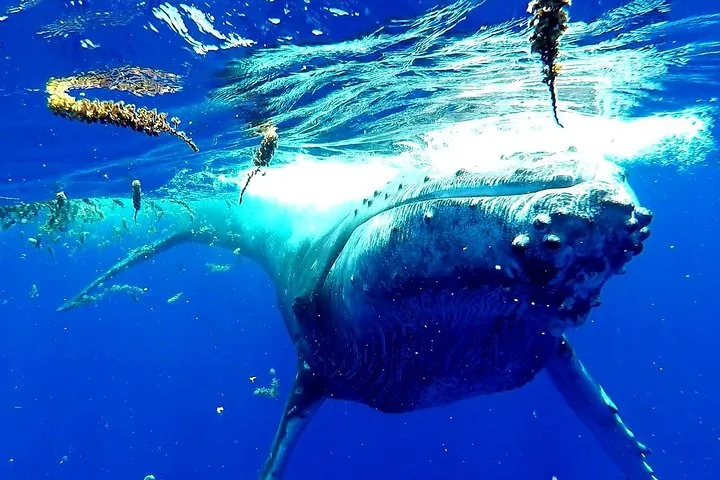
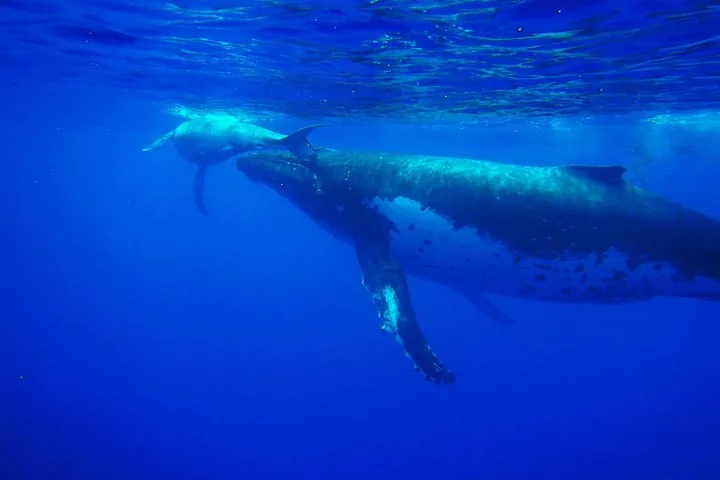
For many visitors, humpback whales are the reason to come. Every year humpbacks migrate into French Polynesian waters to breed, give birth and raise calves, and Moorea’s whale boats head out beyond the reef to find them. You might see a tail lift above the surface, a mother and calf traveling together, or a breach, when a whale throws most of its body out of the water. The island’s peaks stand behind all of it, which makes for remarkable photos.
On this site the top-rated pick is the Moorea Half-Day Small-Group Whale Watching (6 Guests), four hours with no more than six guests (5.0 from 113 reviews, from $254 per person). For a lower price with more company, the Moorea Humpback Whale Tour: Watch or Swim costs from $179 (4.9 from 327 reviews). Our best whale watching tours in Moorea guide compares the rest.
When can you see whales in Moorea?
Humpbacks are usually around from July to November, but the regulated approach season is narrower. French Polynesia’s cetacean approach rules set it at 20 July to 20 November, with observation trips allowed between 7:30 a.m. and 5:30 p.m. The rules can change, so check them for your dates.
If whales are the point of the trip, aim for August, September or October. Sightings still depend on the sea and on the animals. Our whale season guide goes month by month.
What happens on a whale-watching tour?
A skipper and guide search the open water outside the reef and watch how the whales behave. Tours differ in length, boat size, swimming requirements and whether you can get in the water.
Choose an operator that:
- Holds the authorization for approaching whales.
- Explains the wildlife rules before you leave the dock.
- Never promises a close approach or a swim.
- Puts safety and the animals ahead of photos.
- Tells you clearly what happens if the sea is too rough.
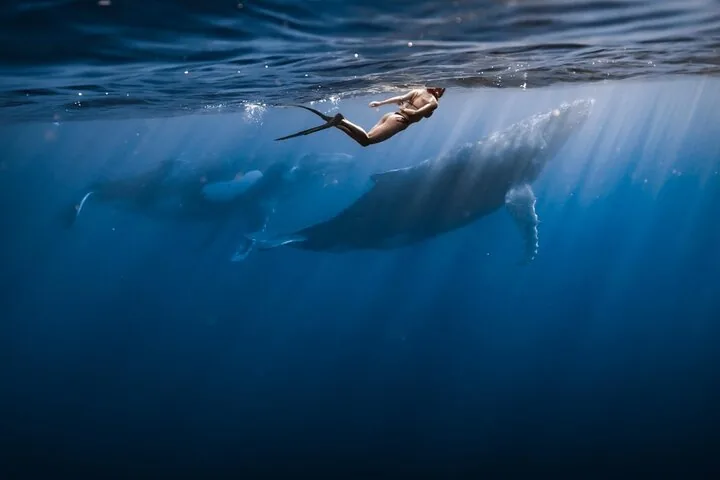
Swimming with humpbacks is tightly regulated. Authorized operators have to keep exclusion distances, limit the number of swimmers and follow other conditions, and Moorea also protects whale resting areas in its bays, lagoon and passes. Our guide to swimming with whales in Moorea covers the rules.
Book the whale trip early in your stay. If the operator cancels for weather, you still have time to go another day.
2. Explore Moorea’s turquoise lagoon on a boat tour
Outside whale season, the lagoon trip is the one to book. The barrier reef encloses a wide, sheltered lagoon of clear, shallow water with several good snorkeling spots.
A guided trip usually includes some of these:
- Cruising along the mountain coast.
- Snorkeling with tropical fish.
- Watching stingrays and blacktip reef sharks.
- Stopping at a small offshore islet, a motu.
- Swimming in the lagoon.
- A picnic or a Polynesian lunch.
Not every tour includes every stop, so read the itinerary rather than booking on the photos.
Half-day or full-day lagoon tour?
A half day gives you several snorkeling stops and a scenic cruise, and it suits short stays and younger children. The four-hour lagoon and reef snorkeling tour from Tiahura costs from $114 (4.9 from 159 reviews).
A full day makes sense if you want lunch on a motu and time between stops. Captain Taina’s Moorea Glass-Bottom Boat Tour with Motu Lunch runs about five and a half hours and suits non-swimmers too, since the glass hull shows the reef (4.9 from 86 reviews, from $162).
A private boat costs more but lets families, photographers and small groups set the pace. The Private Luxury Catamaran Cruises in Moorea Day or Sunset starts at $751 (5.0 from 29 reviews). Our Moorea snorkeling tours page compares shared, full-day and private lagoon boats.
3. Snorkel with tropical fish, rays and reef sharks
You don’t need to dive to see Moorea’s marine life. The lagoon holds coral, reef fish, stingrays and blacktip reef sharks. Some of it is visible from the beach; the rest is easier by boat.
Three options are popular:
- Temae Beach: one of the best-known public beaches, with clear water and snorkeling close to shore. Currents get stronger near the reef channels.
- The northwest lagoon near Les Tipaniers: the usual departure area for boat trips to the ray-and-shark sandbank and the nearby motu.
- Guided reef snorkeling: a guide knows the safe entry points, where the animals are and what the current is doing. The Tiahura lagoon and reef tour is the best-reviewed of these on this site.
Blacktip reef sharks usually keep away from people, but they are wild animals. Never chase, touch or feed sharks or rays, and follow your guide’s instructions. Keep your fins clear of the coral and never stand on it.
Our guide to the best snorkeling in Moorea covers each spot.
4. Visit Belvedere Lookout
Belvedere is one of the best viewpoints in French Polynesia. It sits inland above the north coast and looks down on Cook’s Bay and Opunohu Bay, with Mount Rotui between them. From here you can see the whole shape of the island’s north side.
The road climbs through the Opunohu Valley past thick forest and farmland, so allow time for stops. You drive to Belvedere itself, and several trails start nearby.
Go on a clear day if you can. Low cloud hides the peaks and changes the view completely.
5. Discover Cook’s Bay and Opunohu Bay
Cook’s Bay, also called Paopao Bay, is a deep inlet ringed by mountains and villages. It has hotels, restaurants and tour departures.
Opunohu Bay is quieter and more open, with the valley road leading up toward Belvedere. Its mountain backdrop looks best after rain.
You can see both from the north coast road, but the best views are from a boat or from the lookouts above. If you like photography, stop at each bay instead of driving straight through.
6. Spend a morning at Temae Beach
Temae is one of Moorea’s best public beaches. It sits near the airport on the northeast coast, with white sand, views across to Tahiti and good swimming and snorkeling when the sea is calm. You don’t need to stay at a resort to use it.
Bring water, sun protection and your own snorkel gear if you have it; don’t count on rentals or food where you settle. The water can look calm from the beach while wind, swell and current are still running, so ask locally before you swim farther out.
Two more public beaches: Ta’ahiamanu in the Opunohu Bay area and Tiahura on the northwest coast. Both are good for a picnic.
7. Explore the pineapple plantations
Moorea’s sweet pineapples grow in the fertile interior, and the fields around Opunohu make a green contrast to the beaches.
You can see them on a guided 4WD trip such as the Moorea 4X4 safari excursion between land and sea with lunch, which climbs into the Opunohu Valley (4.9 from 42 reviews, from $139), or on a quad: the Grand Tour Quad Excursion in Moorea runs about four hours from $126 (4.9 from 632 reviews on Viator). An e-bike rental costs from $69 (4.9 from 47 reviews on Viator) if you would rather ride yourself.
Pineapple juice and jam make good souvenirs from local shops. The plantations are working farmland, so stay on marked routes.
8. Hike to Magic Mountain
Magic Mountain looks out over the lagoon and the reef, where Belvedere looks at the bays and peaks. The path is steep and crosses private land, so access fees and restrictions can apply.
Tahiti Tourisme describes it as a short hike of about an hour, but the gradient is hard work in heat or rain. Many visitors go up on a guided 4WD trip instead of walking.
Wear shoes with good grip, carry water and skip it in heavy rain, when the path gets slippery.
9. Discover Polynesian culture and food
Make time for Polynesian navigation, cooking, crafts, music and dance as well as the scenery. Tiki Village is the island’s established cultural center, with organized visits and shows; check its current program and booking arrangements before you go.
Dishes to look for:
- Poisson cru au lait de coco: raw fish, usually tuna, in lime and coconut milk.
- Mā’a tinito: a Chinese-influenced Polynesian dish, usually pork, beans and vegetables.
- Tropical fruit: pineapple, papaya, mango and whatever is in season.
- Local fish: often grilled and served with rice, vegetables or a sauce.
Lunch at a snack, the local name for a casual eatery, is often the best-value meal of the trip.
10. Try a helmet walk or kayaking
Snorkeling is the easiest way into the lagoon, but you can also walk on the seabed. The Aquablue helmet underwater walking experience needs no certification and puts you among fish and stingrays (4.9 from 78 reviews, from $100).
For something gentler, a kayak takes you across the sheltered parts of the lagoon. The Hauru Lagoon 3-hour Guided Kayak Tour uses clear-bottom kayaks and stops to snorkel in a coral garden between the motu (4.9 from 77 reviews, from $91).
Watch for boat lanes, traffic, wind and current. Do not paddle through a reef pass or into open water without experience and local guidance.
Best time to visit Moorea
You can visit Moorea all year, but the season changes the weather, the prices and which trips run. Daytime temperatures are usually around 25 to 30°C.
Moorea’s two main seasons
| Season | Months | What to expect | Best for |
|---|---|---|---|
| Drier season | May to October | Less rain, slightly cooler, busier | Hiking, snorkeling, sightseeing |
| Wetter season | November to April | Warmer, more humid, more tropical showers | Green scenery, possibly lower room rates |
These are not fixed lines. It can rain in the dry season, and the wet months still have plenty of sun. Tahiti Tourisme gives May to October as the drier period and November to April as the warmer, wetter one.
When is the best month to visit Moorea?
September balances weather, activities and the chance of humpbacks. October also works, with whales still possible and the weather getting more changeable as the wet season approaches.
May and June suit visitors who mainly want hiking, lagoon trips and fewer people than in July and August.
If whales are your priority, plan around the 20 July to 20 November approach season, not the wider migration period.
Can you visit Moorea in December, January or February?
Yes. The lagoon, beaches and most land activities still work. These months are wetter and more humid, though, and heavy showers can close trails, cloud the water and cancel boats.
Do not expect regular whale watching in these months. Plan around lagoon snorkeling, scenic drives, culture and outdoor plans you can move.
How to get to Moorea from Tahiti
Most international visitors land at Faa’a International Airport (PPT) on Tahiti and continue by ferry or a short flight. The ferry is the simpler choice for most people.
Tahiti to Moorea ferry
Ferries leave from the waterfront in central Papeete and arrive at Vaiare on Moorea’s east coast. The crossing takes about 25 to 45 minutes, depending on the ship.
Main ferry operators
| Operator | Typical crossing | Adult one-way fare |
|---|---|---|
| Aremiti (Aremiti 5 and 6) | About 25 minutes on Aremiti 6 | 2,350 XPF tourist fare |
| Vaeara’i | About 45 minutes | Check the operator; from $18 on Viator |
| Tauati Ferry | Check with the operator | 1,100 XPF |
Aremiti publishes separate resident and tourist fares; the 2,350 XPF adult tourist fare (age 13 and over) is the one most visitors pay, as listed on aremitiexpress.com. Tauati lists 1,100 XPF one way and 2,200 XPF return for adults and children on tuateaferries.com, and its tickets are non-refundable. The Vaeara’i ferry ticket on Viator starts at $18 per person (4.3 from 72 reviews).
Schedules and ships change, so confirm departures for your date on the operators’ own sites.
How much does the ferry cost?
A foot passenger pays 1,100 to 2,350 XPF one way, depending on the company. Taking a car costs extra, and not every sailing or ticket type carries vehicles.
Should you book the ferry in advance?
A foot passenger on an ordinary day can usually just turn up. Book ahead for school holidays or if you need a particular sailing.
Reserve vehicle space if you are bringing a rental car from Tahiti, and check that your rental agreement allows the ferry.
If you are coming off an international flight, allow time for immigration, bags and the ride from the airport to the ferry terminal. Don’t plan the connection on your landing time alone.
Can you fly from Tahiti to Moorea?
Yes. The flight itself takes about 10 to 15 minutes, but check-in and airport time make the whole trip longer. Flying helps when a multi-island itinerary routes through Moorea; for a plain Tahiti to Moorea transfer, the ferry is usually easier.
How to get around Moorea
A coast road of about 60 kilometers links most villages, hotels and beaches. The island looks compact on a map, but the sights are spread across different coasts.
Renting a car
For most independent travelers a rental car gives the most freedom. Some companies have desks near the airport or the ferry terminal. A car lets you combine Belvedere, several beaches, local restaurants and viewpoints in one day.
Allow about two hours for a loop of the island with a few stops, or most of a day if you stop properly.
Scooters and e-bikes
Scooters and e-bikes work well for confident riders on shorter trips. Think about the sun, rain, road surface and distance before you choose one, and note that not every steep inland road suits every vehicle.
Taxis and transfers
Taxis exist but are fewer than you might expect. For airport or ferry arrivals and early tour starts, book transport ahead. Many hotels and guesthouses offer or arrange transfers.
Public buses
Buses run along the coast road, but they are not frequent or regular enough to build a tight schedule on. Tahiti Tourisme also recommends transfers or a rental vehicle over the bus for flexible sightseeing.
Rent a car for at least one full day, even if your hotel includes transfers and tours. The inland viewpoints and coastal villages are best at your own pace.
Where to stay in Moorea
Your base makes a big difference to how easy the trip feels. Moorea has family-run guesthouses, self-catering bungalows, boutique hotels and overwater resorts. Pick the area by what you want close: beaches, tour departures, restaurants or the ferry.
| Area | Best for | What to know |
|---|---|---|
| Maharepa / northeast coast | Shops, restaurants, resort stays | Facilities close together |
| Temae | Beach time, snorkeling, the airport | Excellent beach; a varied choice of rooms |
| Cook’s Bay / Paopao | Mountain views, restaurants | A scenic base for exploring |
| Opunohu / Papetoai | Quiet, lagoon trips, nature | Suits travelers focused on the water |
| Tiahura / Haapiti | Sunsets, guesthouses, lagoon trips | A slower, beach-centered stay |
| Vaiare | The ferry | Practical for short stays and onward connections |
The area names link to current room listings on Booking.com.
Best area for first-time visitors
For three to five nights, the north and northwest coasts make the easiest bases. You are close to the lagoon tour departures, the bays and a good choice of restaurants.
If you are coming mainly for whales, check where your tour leaves from before you book a room. Operators leave from different points around the island, and not all include a transfer.
Are Moorea’s overwater bungalows worth it?
They can be, especially for a honeymoon or a special occasion. You step straight from your room into the lagoon. They are among the most expensive rooms on the island, though, and a resort feels less independent than a small beachfront guesthouse.
On a longer trip, split your stay: most nights in a guesthouse or garden bungalow, then one or two nights over the water. You keep flexibility for tours and still get the resort night.
How many days do you need in Moorea?
You can see Moorea on a day trip from Tahiti, but staying overnight gives you far more of the island.
| Stay | What you can do |
|---|---|
| 1 day | A lagoon trip or a scenic island tour, not both |
| 2 days | One water activity and one day exploring the island |
| 3 days | Lagoon tour, viewpoints, beaches and slow evenings |
| 4 to 5 days | Add whale watching in season, more snorkeling, hiking and room for weather |
| 6 to 7 days | More activities, with no rush |
Three to five nights suits most first visits.
Suggested 4-day Moorea itinerary
Day 1: arrive and settle in. Take the ferry from Tahiti, collect your rental car and check in. Spend the afternoon at Temae or the beach nearest your room, then have a slow dinner by the water.
Day 2: the lagoon. Book a half-day or full-day snorkeling trip, ideally with a motu stop and guided marine-life stops. Keep the rest of the day free for the beach or the sunset.
Day 3: whales or the lagoon again. In whale season, join an authorized whale-watching trip. At other times, try a guided kayak, a helmet walk or another lagoon trip.
Day 4: mountains and viewpoints. Drive up the Opunohu Valley to Belvedere Lookout, pass the pineapple fields and stop at Cook’s Bay. Return the car and take the ferry back to Tahiti if you are leaving.
If whale watching is a must, put it on your first full day and keep the rest loose. Boat trips depend on the weather, and a cancelled trip may be impossible to rebook at the end of your stay.
How expensive is Moorea?
Moorea is not cheap, especially once flights and rooms are added. You don’t need a resort budget for the best of it, though: public beaches, viewpoints, small guesthouses and casual restaurants keep an independent trip affordable.
Indicative daily budgets
These are rough planning ranges for one person sharing a double room, without international flights or big paid excursions. They are not hotel quotes.
| Style | Rough daily budget | What it covers |
|---|---|---|
| Budget | €100 to €170 | Guesthouse share, simple meals, little transport |
| Mid-range | €180 to €320 | Comfortable room, restaurants, a share of a rental car |
| Upscale | €400 and up | Higher-end resorts, more dining and transport |
Overwater bungalows can push the daily cost well above the upscale range. Price whale watching, private charters and full-day lagoon trips separately; the shared trips named on this page cost from $91 for the guided kayak to $254 for the six-guest whale trip, and they can be a large share of the activity budget.
Ways to spend less
- Stay in a guesthouse or self-catering bungalow.
- Take the ferry instead of a private transfer.
- Rent a car for a day or two, not the whole stay.
- Eat some meals at local snacks.
- Mix free beaches and viewpoints with a few chosen tours.
- Travel in May, June or the wetter months, and compare actual room rates.
The biggest saving usually comes from the room you choose, not from skipping the trips you came for.
Moorea travel tips: what to know before you go
Money and payment
French Polynesia uses the CFP franc (XPF). Most hotels and tour companies take cards, but carry some cash for small restaurants, roadside stalls and shops away from the main visitor areas. Check whether your bank charges foreign transaction fees.
Language
French and Tahitian are widely spoken. English is common in hotels and with established tour operators. A few local words go down well:
- Ia ora na: hello
- Māuruuru: thank you
- Nana: goodbye
Internet and mobile service
Many hotels and guesthouses have Wi-Fi, but speed varies. Check your provider’s roaming rates for French Polynesia before you fly; it is not automatically covered by mainland French or European roaming plans. A local SIM or travel eSIM helps for maps and for calling tour operators.
What to pack
Bring light clothes, and more than beachwear: walking shoes, a light rain jacket, swimwear, sunglasses, a sun hat and strong sunscreen. On boats, a rash guard or light long-sleeved top protects you from the sun, and a dry bag keeps cameras and phones out of the spray. If you plan to snorkel a lot, your own well-fitting mask makes it more comfortable.
Mosquitoes and health
French Polynesia has mosquitoes, and dengue is a risk. Use insect repellent and check current health advice before you travel. Bring prescription medicine in its original packaging with the paperwork. Moorea has fewer medical facilities than Tahiti.
Ocean safety
Calm lagoon water is not proof that it is safe. Reef passes can carry strong currents, swell reaches some beaches and the weather can change quickly. Don’t swim alone in places you don’t know, and don’t head for an offshore spot just because it looks close from the beach. For open-ocean trips, choose licensed, properly equipped operators.
Cultural and environmental etiquette
Moorea is a lived-in island. Respect private land, dress modestly away from the beach and ask before photographing people or ceremonies. In the lagoon, don’t touch wildlife, stand on coral or take shells and other natural material from protected areas. Choose tours that put wildlife welfare first and explain the rules.
Entry requirements
French Polynesia is a French overseas collectivity, but it is not part of the Schengen Area, and a Schengen visa does not automatically let you in. Requirements depend on your nationality, residence and length of stay, so check the official France-Visas website before you book flights.
Frequently asked questions
Is Moorea part of Tahiti?
No. Moorea is a separate island close to Tahiti, and both belong to the Society Islands. Frequent ferries link them, which makes Moorea one of the easiest islands to add to a Tahiti stay.
Is Moorea better than Tahiti?
Moorea is usually the better choice for lagoons, beaches, snorkeling and a slow island pace. Tahiti has more shops and restaurants around Papeete, plus its own mountains, surf breaks and cultural sights. Many itineraries include both.
Can you see whales in Moorea?
Yes. Humpbacks migrate through French Polynesian waters, and Moorea is known for whale-watching trips. The migration runs roughly July to November, and commercial approaches are allowed from 20 July to 20 November under the territory’s rules. Sightings and swims are never guaranteed.
Can you swim with whales in Moorea?
Authorized operators can offer regulated swims, subject to the wildlife rules, the sea and the skipper’s judgement. Not every sighting allows swimmers in the water, and you may need to show you can swim well in open water. Check the operator’s authorization, eligibility rules, safety procedures and cancellation policy.
Is Moorea safe for tourists?
Moorea is generally a relaxed place to visit, with ordinary precautions. Lock away valuables, drive carefully, take care on hiking trails and respect ocean currents. The weather and the sea matter more here than city-style crime.
Do you need a car in Moorea?
Not if your hotel includes transfers and you mostly book organized tours. To see several beaches, viewpoints and villages on your own, rent one: public transport is limited.
Can you visit Moorea without staying overnight?
Yes. Frequent ferries make a day trip from Tahiti possible. Choose one main activity rather than squeezing a long lagoon tour, an island drive and several beaches into one day.
Is Moorea good for snorkeling?
Yes. The lagoon has coral, reef fish, rays and reef sharks, with easy shore snorkeling and plenty of guided boat trips. Temae Beach and the northwest lagoon are the best known. Conditions change with location and weather, so follow local advice.
Are there good public beaches in Moorea?
Yes. Temae, Ta’ahiamanu and Tiahura are the best-known public beaches, each with a different mix of sand, lagoon views, picnic spots and water access.
What is the best month for Moorea whale watching?
August, September and October fall in the middle of the season. September suits travelers who want whales plus dry-season hiking and snorkeling. Neither sightings nor sea conditions are guaranteed.
Is Moorea expensive?
It can be, especially for luxury resorts and private boats. Guesthouses, self-catering stays, casual restaurants, public beaches and shared tours keep costs down.
How long should you stay on Moorea?
Three to five nights suits most first visits. That gives you a lagoon tour, a day exploring, beach time and, in season, whale watching. Stay longer if you want to hike more or keep spare days for weather.
Is Moorea the right island for you?
On Moorea you can float over coral in the morning and drive up to a mountain viewpoint in the afternoon, and in whale season you might see a humpback the same week. You get wildlife, mountains, culture and the lagoon without moving between islands.
For a first French Polynesia trip that mixes rest and activity, give Moorea several days and skip the quick ferry hop. Check your dates against the whale season, keep a day for the lagoon, and book wildlife trips with responsible local operators early in your stay, because the sea can cancel any boat day.
More Moorea guides:
Look for Humpbacks With Six Guests on Board
Free cancellation up to 24 hours before. Moorea Lagoon and Reef Snorkeling Tour with Drinks from $114 per person.
Check Availability & Book