Where and how can you see wild dolphins in Moorea?
Spinner dolphins live around Moorea all year. Compare dolphin watching tours, the best time of day, swim rules, prices and what to ask before you book.
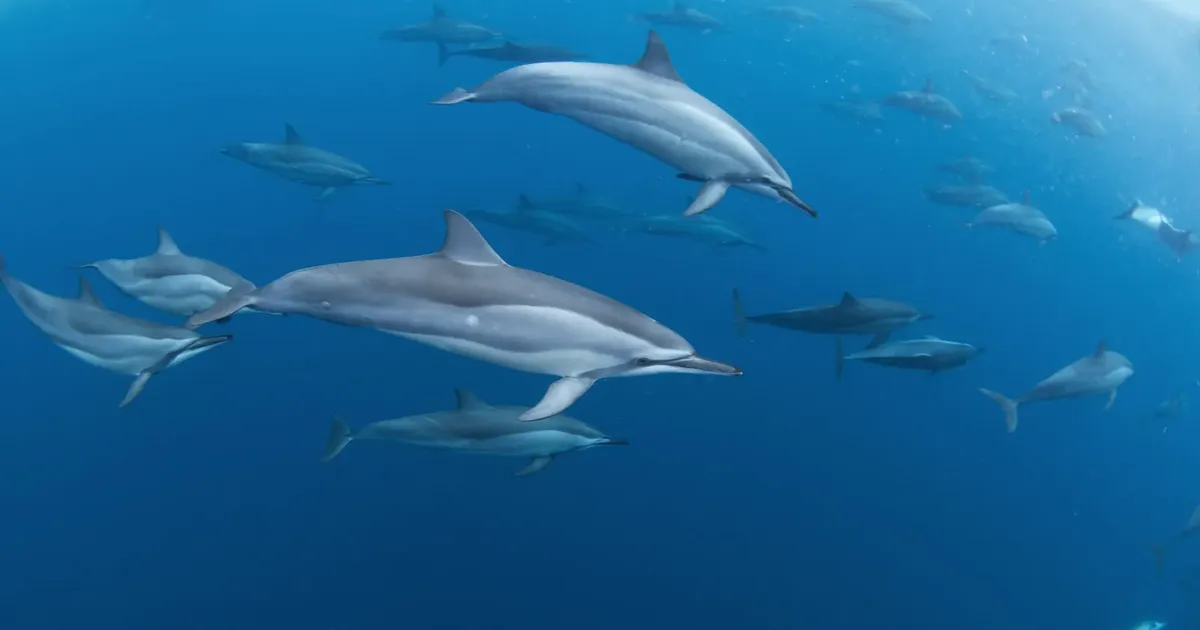
You can see wild spinner dolphins in Moorea in any month: they feed offshore at night and rest in the island’s bays and along the reef by day, so a morning boat trip with a good guide gives you a fair chance. No tour can promise a sighting. Book a naturalist-led trip if dolphins are the main goal, or a snorkeling trip that includes dolphin watching if you also want rays, sharks and turtles. The Moorea Small-Group Snorkeling Tour with Dolphin Watching spends about 30 minutes with the resting spinners off Haapiti, from $143 per person (5.0 from 23 reviews, so still a young listing).
Check Availability
Moorea dolphin watching at a glance
| Question | Quick answer |
|---|---|
| Can you see dolphins in Moorea? | Yes, wild dolphins live in the waters around the island |
| Most commonly seen species | Spinner dolphins |
| Other dolphins | Rough-toothed dolphins |
| Best season | Year-round |
| Best time of day | Morning is a good first choice, not a guarantee |
| Typical excursion length | About 3 to 4 hours |
| Where to look | Coastal waters, sheltered bays and beyond the reef |
| Can you see dolphins without swimming? | Yes |
| Are sightings guaranteed? | No |
| Best choice for families | A wildlife-watching boat with shaded seating |
| Best choice for snorkeling | A combined dolphin-watching and lagoon trip |
| Best choice for photographers | A flexible private boat or a specialist wildlife trip |
Operators publish high sighting rates. The cruise-line listing for Dr. Michael Poole’s dolphin expedition says dolphins are found on 95% of its tours. That is the operator’s own figure for its own trips. Nobody publishes an island-wide rate, and what you see on any day depends on the weather and sea state.
Other Experiences
Other experiences you might enjoy
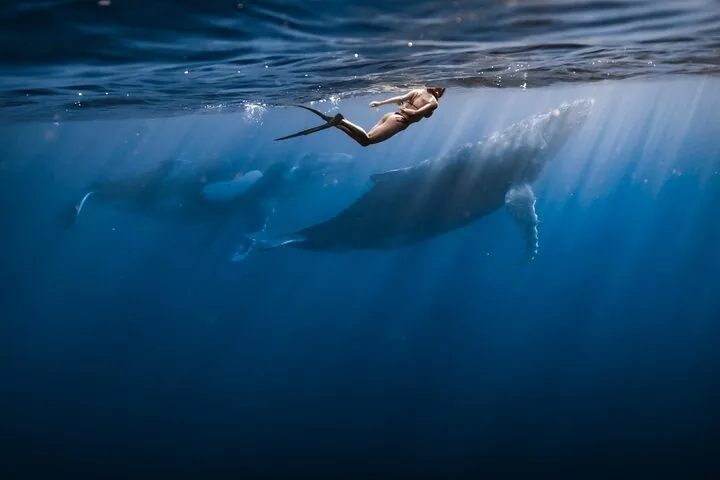
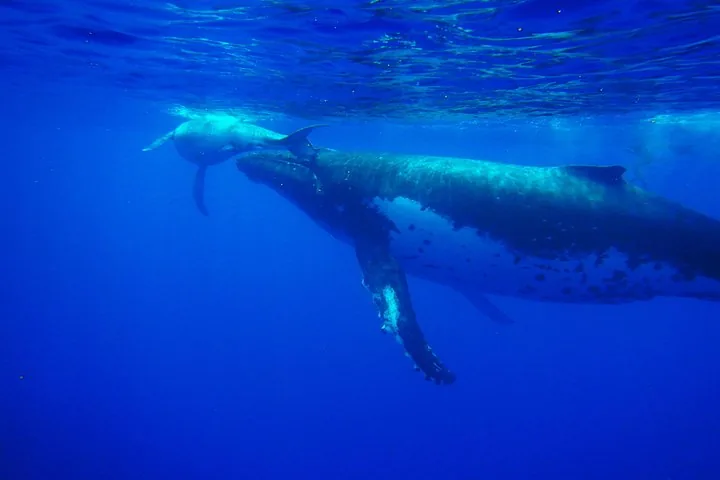
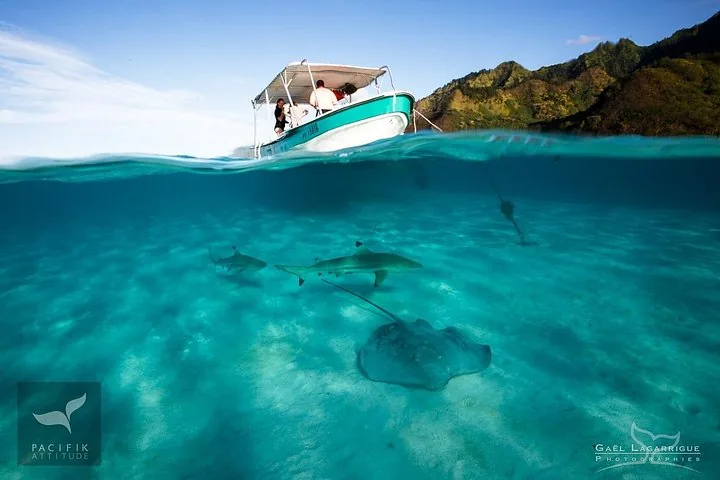
More Moorea whale and lagoon tours, each with its own page and booking link.
What kinds of dolphins can you see in Moorea?
Spinner dolphins: Moorea’s familiar residents
The spinner dolphin (Stenella longirostris) is the dolphin you are most likely to see on a Moorea trip.
These slim, energetic dolphins are famous for leaping out of the water and spinning along the long axis of their body, sometimes more than once before they splash back down.
They don’t spend the whole day jumping, though. Spinner dolphins hunt in deep water at night for small fish, squid and other prey. By day they come into sheltered coastal water to rest and socialize.
That daily routine is why Moorea works so well for watching them: you can find dolphins close to the island instead of running far offshore.
What makes them special:
- They travel in social groups that can number dozens of dolphins.
- Their aerial spins are among the most distinctive behaviors of any dolphin.
- You can find them around Moorea all year.
- They rest by day, so a quiet, low-disturbance approach matters more than usual.
Research on spinner dolphins shows that disturbing their daytime rest can affect how well they recover from feeding at night.
Rough-toothed dolphins: a less predictable encounter
Rough-toothed dolphins (Steno bredanensis) also live around Moorea.
They have a gently sloping forehead and a longer, less sharply defined beak than spinners, and they usually stay in deeper offshore water.
You may see them travelling as a group or notice their curious behavior at the surface.
You see them far less often than the spinners, so count them as a bonus if they turn up.
Dr. Michael Poole’s dolphin trips name both species among the dolphins they look for.
What about pilot whales?
You can also meet pilot whales around Moorea.
Despite the name, pilot whales belong to the oceanic dolphin family, Delphinidae. They are much larger than spinner dolphins, with rounded foreheads and dark bodies.
Sightings are rarer and harder to predict, so treat them as a lucky surprise on an offshore trip.
Where can you see dolphins in Moorea?
Dolphins move freely around Moorea. No beach, reef or viewing point guarantees a sighting.
Your chances improve with a guide who knows the animals’ daily movements and can read their surface behavior without disturbing them.
Cook’s Bay
Cook’s Bay is one of Moorea’s most scenic spots, ringed by steep volcanic ridges.
Its sheltered water sits close to deeper coastal areas, which makes it a beautiful start for a boat trip.
You may meet dolphins in or near the bay, but where they rest changes from day to day.
The scenery alone repays an early start on the water.
Opunohu Bay
Opunohu Bay lies west of Cook’s Bay and is just as striking, with wooded mountains above calm blue water.
Dolphins can travel through the nearby water, including near the reef and the mouth of the bay.
It is a good area for a broader wildlife trip, but don’t count on dolphins being there at a set time.
The waters outside Moorea’s barrier reef
The barrier reef separates most of the sheltered lagoon from the deep Pacific.
Beyond the reef, guides look for dolphins travelling offshore, including species you rarely see in the bays.
Some tours spend time in the lagoon before heading out through a reef pass into open water.
That way you see both the turquoise lagoon and the much deeper blue of the open ocean.
Our tip: don’t pick a dolphin tour because it advertises one particular bay. Pick it for the guide’s wildlife knowledge, the time set aside for looking for animals, and how the operator approaches them.
Best Moorea dolphin watching tours compared
Boat trips around Moorea vary a lot. Some are specialist wildlife trips; others include dolphin watching as one stop on a snorkeling day.
| Tour type | Best for | Typical duration | What to expect | Our pick |
|---|---|---|---|---|
| Dedicated dolphin-watching trip | Wildlife fans, families, non-swimmers | About 3 hours | Searching for dolphins, naturalist commentary, scenic cruising | Dr. Michael Poole’s eco tours (not sold online through us; book direct or through your cruise line) |
| Dolphin and lagoon snorkeling | First-time visitors | 3–4 hours | Dolphin spotting plus reef snorkeling | Small-Group Snorkeling Tour with Dolphin Watching, from $143, 5.0 from 23 reviews |
| Private wildlife expedition | Couples, photographers, small groups | 4–8 hours | Flexible route, specialist guide | Compare operators in our private boat tours guide |
| Dolphin and whale watching | Visitors in whale season | 3–4+ hours | A chance of both, depending on the route | Half-Day Small-Group Whale Watching (6 Guests), from $254, 5.0 from 120+ reviews |
These compare tour formats; check each itinerary for what it includes.
Dr. Michael Poole’s Dolphin & Whale Eco Tours
Best for: dedicated dolphin watching and marine biology.
This is the trip to book if you want more than a quick sighting.
Dr. Michael Poole has studied dolphins and whales in French Polynesia since 1987, and he started running eco-tours in 1992 to help fund that research. His trips focus on watching wild animals and explaining their behavior, social life and ecology.
Norwegian Cruise Line sells it as a three-hour shore excursion on a covered boat, looking for spinner dolphins and, less often, rough-toothed dolphins or pilot whales. Dr. Poole or his assistant leads it.
The trip is for watching, photographing and learning, not swimming.
Cruise lines sell it at their own excursion prices, so expect the price to vary with how you book. We found no listing you can book online through GetYourGuide or Viator.
Why choose it: a specialist trip that suits anyone who wants to watch dolphins without getting in the water.
What to check before booking: whether it runs for independent travelers on your dates or only as a cruise excursion.
Moorea Expedition Snorkeling Safari
Best for: dolphin spotting plus snorkeling.
Moorea Expedition, formerly Moorea Dolphin Expedition, says it has run marine trips since 1984.
Its Snorkeling Safari mixes a chance of dolphins with other marine life: turtles, stingrays, blacktip reef sharks and coral gardens.
The operator describes a three- to four-hour outing with snorkeling gear and drinks included. Its current prices and departure dates are on its own site; check them for your travel dates. The safari is not sold through GetYourGuide; the company’s whale trips are.
Why choose it: a varied day on the water that is still enjoyable if the dolphins don’t show.
What to check: the season it runs, transfers, and how much of the time goes to looking for dolphins compared with lagoon snorkeling.
Moorea Ocean Adventures Private Wildlife Tour
Best for: private outings, photography and flexible wildlife routes.
Moorea Ocean Adventures runs private marine wildlife tours for up to six guests with a naturalist guide.
Trips can combine dolphins with turtles, rays, reef fish and other marine life, depending on the route and the conditions.
Private wildlife boats in Moorea are priced per boat:
| Private itinerary | What it costs |
|---|---|
| 4 hours, 1–2 people | One price for the whole boat; ask for the current rate |
| 4 hours, 3–6 people | The boat price for a bigger party, shared by more people |
| 8 hours, 1–2 people | A full-day boat price |
| 8 hours, 3–6 people | The full-day price shared, the lowest cost per person for a full day |
As a guide, published Moorea private lagoon charters run from about €420 for four hours for one or two people to €1,000 or more for bigger boats; our private boat tours guide lists them. The price covers the whole boat, not each person.
Why choose it: one of the most flexible formats if dolphins are a big priority or you want the day built around marine photography.
What to check: exactly which wildlife activities are included, whether getting in the water is offered, and whether the guide will change the route to leave resting dolphins alone.
Which would we book?
If you mainly want dolphins, start with a dedicated naturalist-led trip instead of a general lagoon cruise.
For families or first-time visitors who also want to snorkel, a combined trip gives better value, because there is plenty to enjoy even when the dolphins stay away. The $143 snorkel and dolphin trip from Tiahura stops at the ray and shark sandbar, the outer reef and a turtle area as well as the dolphins (our breakdown).
For four to six people sharing the cost, a private wildlife boat makes more sense, especially if you want the guide to spend more time with wildlife and less on a fixed sightseeing route.
Check prices and availability again before you book, especially for 2027.
Best time to see dolphins in Moorea
You don’t need to come in whale season to see dolphins.
Humpback whales visit French Polynesia for a season; spinner dolphins live around Moorea all year.
That makes dolphin watching a good plan in January, April, June or December as well as in the busy August-to-October whale months.
Best time of year
| Period | Dolphin watching | What to consider |
|---|---|---|
| January–March | Possible all year | Warm, humid weather and more rain |
| April–June | Possible all year | Weather turning drier |
| July–October | Dolphins plus seasonal whales | Busy season; book specialist trips early |
| November–December | Possible all year | More humid; whale trips end November 20 |
Dolphins being there is not the same as dolphins being easy to see. Sea state, the animals’ movements, the boat’s route and the guide’s experience all affect your chances.
Morning or afternoon: which is better?
We would usually take a morning departure if you can choose between early morning and mid-afternoon.
There are two reasons.
First, calm water makes dolphins easier to spot. On some days the wind and chop pick up through the afternoon, though not every day.
Second, spinner dolphins often move into sheltered coastal water after feeding offshore overnight.
Moorea Ocean Adventures describes morning encounters with resident spinner dolphins in the island’s bays and lagoon.
Resting dolphins are not an invitation to get close. Animals at rest are especially sensitive to disturbance.
Our advice: book an early tour with a responsible naturalist, but a morning slot does not guarantee a better encounter. An afternoon trip in good conditions with an experienced guide can be just as good.
Can you swim with dolphins in Moorea?
Settle this before you book.
Some Moorea operators advertise dolphin watching with possible in-water encounters. Watching wild dolphins from a boat and getting in the water near them are very different activities.
Dolphins are protected marine mammals in French Polynesia, and the territory has tightened its marine mammal observation rules in recent seasons, including rules for species other than humpback whales.
Don’t assume swimming with dolphins is allowed just because a tour advertises it.
Before you book an in-water trip, ask the operator to explain the current legal rules, its permits and when guests may enter the water.
A responsible guide never encourages guests to chase, touch, feed or corner dolphins.
Why we prefer boat-based encounters
Watching dolphins from a boat can be every bit as memorable as being in the water.
You may see them travelling in social groups, surfacing together or spinning in the air, without interrupting what they are doing.
Studies of spinner dolphins in several places have recorded how tourism and repeated contact with people affect their rest.
A good wildlife trip should:
- Keep appropriate distances and follow current local rules.
- Let the dolphins decide whether an encounter happens.
- Avoid chasing, sudden speed changes or cutting across a travelling pod.
- Respect resting groups.
- Leave the animals alone when needed.
The rules for approaching whales are not necessarily the same as those for dolphins. Your operator should be able to explain the dolphin rules themselves, not only the whale rules.
What happens on a dolphin-watching tour?
Itineraries vary, but a typical three-hour dolphin trip follows a simple pattern.
Before departure
You meet your guide at the departure point: a dock, a marina or an agreed hotel pickup.
The crew explains the route, the safety rules and which species you might see.
On specialist trips the briefing may cover dolphin biology and the marine environment around Moorea.
Heading out to find dolphins
The boat heads along the coast or beyond the barrier reef, depending on conditions and the day’s plan.
Your guide watches for dorsal fins, splashes and changes at the surface.
Good guides know where dolphins are often found, though nobody can say exactly where they will be.
Watching the dolphins
If the crew finds a group and can watch without disturbing it, the boat slows or holds position as the rules allow.
You can photograph the dolphins or simply watch them move through the water.
Sometimes this lasts only a few moments; other days you get a long look.
The best encounters have dolphins travelling together with Moorea’s volcanic peaks behind them.
The return journey
Depending on the tour, your guide keeps looking for wildlife or heads back along a scenic stretch of coast.
Combined trips may add snorkeling stops; specialist dolphin trips spend more of the time with marine mammals.
How much do dolphin-watching tours in Moorea cost?
Prices depend mostly on whether you book a shared trip, a cruise-line excursion or a whole private boat.
| Experience | Example price |
|---|---|
| Shared snorkel and dolphin trip | From $143 per person |
| Cruise-line dolphin expedition | Set by the cruise line |
| Private four-hour wildlife boat | From about €420 per boat for one or two people |
| Private full-day wildlife boat | Roughly €1,000 or more per boat |
Shared price from the GetYourGuide listing; private rates from Moorea charter operators’ published 2026 prices. Prices change and some trips are seasonal.
Is a private dolphin-watching tour worth it?
For one or two people, a shared trip is usually better value.
For four to six people, a private boat becomes competitive.
For example, an €800 private half day shared by six people works out at about €133 each, close to a shared ticket.
The bigger gain is flexibility.
You may be able to set a route that puts dolphins first, change your snorkel stops or spend extra time on photos.
A private charter does not bring more dolphins, and the boat still has to follow the marine wildlife rules.
Dolphin watching vs whale watching in Moorea
Dolphin watching runs all year, often on shorter naturalist-led trips. Whale watching is seasonal and brings you much larger migrating animals.
Both are good trips, for different reasons.
| Feature | Dolphin watching | Whale watching |
|---|---|---|
| Season | Year-round | July 20 to November 20 |
| Main species | Spinner dolphins | Humpback whales |
| Typical encounters | Travelling pods, surface activity | Breaching, surfacing, tail displays |
| Swimming required | No | No, on watching tours |
| Tour duration | Often 3–4 hours | Often 3–4 hours |
| Best for | Families, wildlife fans | Travelers hoping to see humpbacks |
If you come in whale season and can only book one trip, choose a wildlife tour that may show you both.
Be clear about what you are buying. A dedicated whale-swim trip may spend nearly all its time looking for whales, not dolphins.
If dolphins are what you came for, book a tour that puts them first.
For more, see our guides to choosing a Moorea whale watching tour and the best time to see whales in Moorea.
Is dolphin watching in Moorea suitable for children?
Yes. A boat-based dolphin trip suits families well, especially compared with open-ocean snorkeling or whale swims.
Children don’t need to be strong swimmers to watch dolphins from a boat.
Whether it suits yours depends on the boat, the conditions, the operator and your child’s age.
What to check before booking
Minimum age: some boats welcome young children or babies, others set limits. Check each tour’s rules.
Boat comfort: a covered boat with proper seats is easier for small children than a small, fast open boat.
Trip length: three hours is long for a toddler, especially if the dolphins don’t appear early.
Seasickness: trips may go into open water, where it is rougher than inside the lagoon.
Life jackets: confirm there are life jackets in the right size for every child.
Toilets: don’t assume there is one on board. Ask before you book, especially with young children.
For children who like to swim, a combined lagoon trip may suit better.
The day then doesn’t hang on the dolphins, and children can snorkel with reef fish or watch rays from the boat.
What should you bring on a dolphin-watching tour?
You need no special gear for a boat-based dolphin trip.
We would bring:
- A hat with a strap.
- Polarized sunglasses to cut glare on the water.
- Sun protection suitable for boats and reefs.
- A reusable water bottle.
- A light rain jacket or windbreaker.
- A waterproof phone pouch.
- A camera with a zoom lens, if you have one.
- Seasickness medication if you get motion sick, taken as your doctor advises.
For photos, a zoom lens does more than trying to get physically closer to the dolphins.
A camera with fast autofocus helps catch dolphins surfacing or jumping.
Spend a few minutes watching without your phone, too. Many of the best moments happen too fast to photograph.
How to choose a responsible dolphin-watching tour
Dolphin watching is at its best when the animals’ needs come first.
French Polynesia has strengthened its marine mammal protection and its oversight of wildlife observation, covering operator qualifications, how boats observe animals and more species than humpbacks alone.
Questions to ask before booking
- Does the operator hold the permits for the activities it sells?
- What does the crew do when dolphins are resting or show signs of disturbance?
- Does the crew follow the current rules on boat distance and getting in the water?
- How many passengers will be on board?
- Is dolphin watching the main activity or only a possible stop on a lagoon cruise?
- What happens if no dolphins are seen?
- Does the tour go into the open ocean?
- Are the guides trained in marine wildlife observation?
Be wary of advertising that guarantees dolphins, promises touching wild dolphins or treats close encounters as something a guide can always arrange.
A responsible operator will tell you that on some days the dolphins are best left alone.
Can you see dolphins in Moorea without booking a tour?
Possibly, but you can’t plan on it.
Dolphins sometimes pass close to the shore, and you may spot them from a beach, a viewpoint or a boat that is already out.
Dolphins keep moving and surface only now and then, so sightings from land are hit and miss.
A guided wildlife trip is the most practical way to improve your chances.
A good guide knows how to spot dolphin activity and where they tend to move.
To save money, try a general lagoon tour that may include dolphins. The Moorea Lagoon and Reef Snorkeling Tour with Drinks (from $114, 4.9 from 190+ reviews) sometimes sees spinners on the way between stops.
These trips spend much more time at snorkel sites than looking for dolphins.
Can you see dolphins on a day trip from Tahiti?
Yes. Moorea is close enough to Tahiti for a dolphin trip in a day.
Ferries run from Papeete to Vaiare on Moorea and take about 25 to 45 minutes, depending on the boat.
Booking the dolphin tour is only part of the plan.
A practical Moorea day-trip itinerary
| Time | Activity |
|---|---|
| Early morning | Ferry from Papeete to Moorea |
| Morning | Transfer to the tour’s departure point |
| Late morning or early afternoon | Dolphin-watching trip |
| Afternoon | Lunch or a short sightseeing stop |
| Later afternoon | Transfer back to Vaiare |
| Afternoon or evening | Ferry back to Tahiti |
These are suggested stages, not a confirmed ferry and tour timetable.
A few things matter:
Ferry times: check the actual departures and return sailings for your date.
Departure point: not every trip leaves from Vaiare. The snorkel and dolphin trip above, for example, meets at Tiahura on the north-west coast, on the far side of the island from the ferry.
Getting there: book a taxi, rental car or the operator’s transfer in advance.
Weather: boat tours can change or cancel in rough seas.
Cruise passengers: allow extra time for tenders, transfers and getting back to the ship.
If you can, spend at least one night on Moorea; the day is far more relaxed.
Our Tahiti to Moorea ferry guide covers the crossing.
Frequently asked questions about dolphins in Moorea
Are there dolphins in Moorea?
Yes. Wild dolphins live in the waters around Moorea, including resident spinner dolphins. Rough-toothed dolphins and other species also turn up, less often.
Can you see dolphins in Moorea all year?
Yes. Spinner dolphins live around Moorea all year, unlike humpback whales, which visit for a season.
What is the best month to see dolphins in Moorea?
No month guarantees better sightings. Dolphins are there all year; how easy they are to see depends on the weather, sea state and the animals’ daily movements.
What time of day is best for dolphin watching?
Morning is a sensible choice, because the sea is often calmer and spinner dolphins come back inshore after feeding offshore at night. You can still see them later in the day.
Are Moorea dolphin-watching tours suitable for non-swimmers?
Yes. Dedicated boat-based dolphin trips never require you to get in the water.
Can you swim with wild dolphins in Moorea?
Some operators advertise possible in-water encounters, but marine mammal protection rules apply. Check the operator’s current permits, and never assume you can enter the water at every sighting.
Are dolphin sightings guaranteed?
No. Dolphins are wild and their location and behavior change. Some operators publish high past sighting rates, but these don’t guarantee what happens on your trip.
How long does a Moorea dolphin-watching tour last?
Dedicated dolphin trips usually take about three hours. Snorkeling combinations and private wildlife trips often run four hours, and longer private days are available.
Can you see dolphins and whales on the same tour?
Possibly, in the humpback season from July 20 to November 20. Some wildlife tours look for several species, but what you see depends on the route, the conditions and the animals.
Where are dolphins most commonly seen around Moorea?
Spinner dolphins use sheltered coastal water, including the bays and parts of the lagoon. You can also meet them near the reef and offshore. Exact spots change.
Is dolphin watching in Moorea worth it?
Yes, especially for wildlife fans, families and anyone visiting outside whale season. A guided trip gives you wild dolphins against some of the finest coastal scenery in French Polynesia.
Final verdict: should you book a dolphin-watching tour in Moorea?
Dolphin watching is one of Moorea’s best year-round wildlife trips, and easy to overlook when you plan around the humpbacks.
The draw is watching wild animals go about their day with a volcanic island behind them.
If you love wildlife, book a specialist naturalist-led trip. For a broader first look at Moorea’s marine life, a combined dolphin and snorkeling trip gives you more variety; see our Moorea snorkeling tours and the best snorkeling spots in Moorea.
And if the dolphins stay away, you are still out on one of the most beautiful lagoons in French Polynesia. Check your dates against the operator’s schedule before you book, because sailings change with the weather.
Look for Humpbacks With Six Guests on Board
Free cancellation up to 24 hours before. Moorea Small-Group Snorkeling Tour with Dolphin Watching from $143 per person.
Check Availability & Book