When is the best time to visit Moorea?
Moorea month by month: the dry and wet seasons, sea and air temperatures, the whale tour window, snorkeling, hiking, prices and the busiest weeks.
The best time to visit Moorea is September. It falls in the drier half of the year, the lagoon is about 27°C (81°F), and licensed humpback whale tours run from July 20 to November 20. October is almost as good. If whales don’t matter to you, May and June have the same drier weather with fewer visitors than July and August. Moorea is warm all year, so the wet months from November to April still work for a resort stay and lagoon trips if you can move plans around the showers.
Check Availability
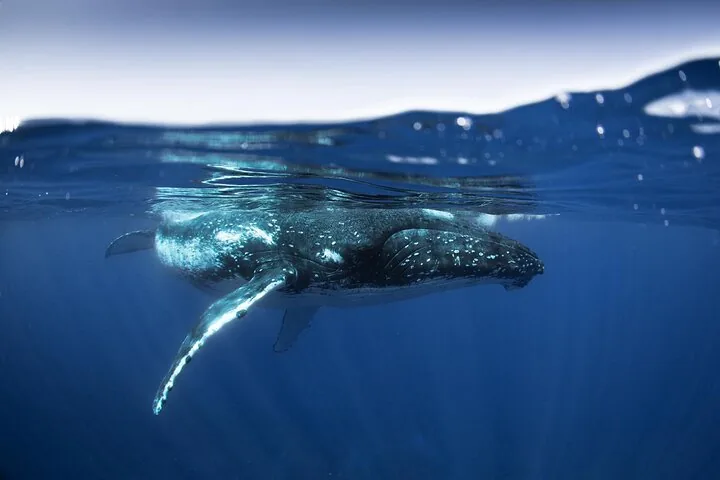
Moorea Half-Day Small-Group Whale Watching (6 Guests)
- 5.0/5 (120+ reviews)
- 4 hours
- Free cancellation
- Operated by Moorea Sea Experience
Includes Half-day boat trip on the open ocean with a guide and captain · Use of snorkeling equipment · Snacks
You'll choose your date and complete the booking on Viator. Free cancellation up to 24 hours before departure.
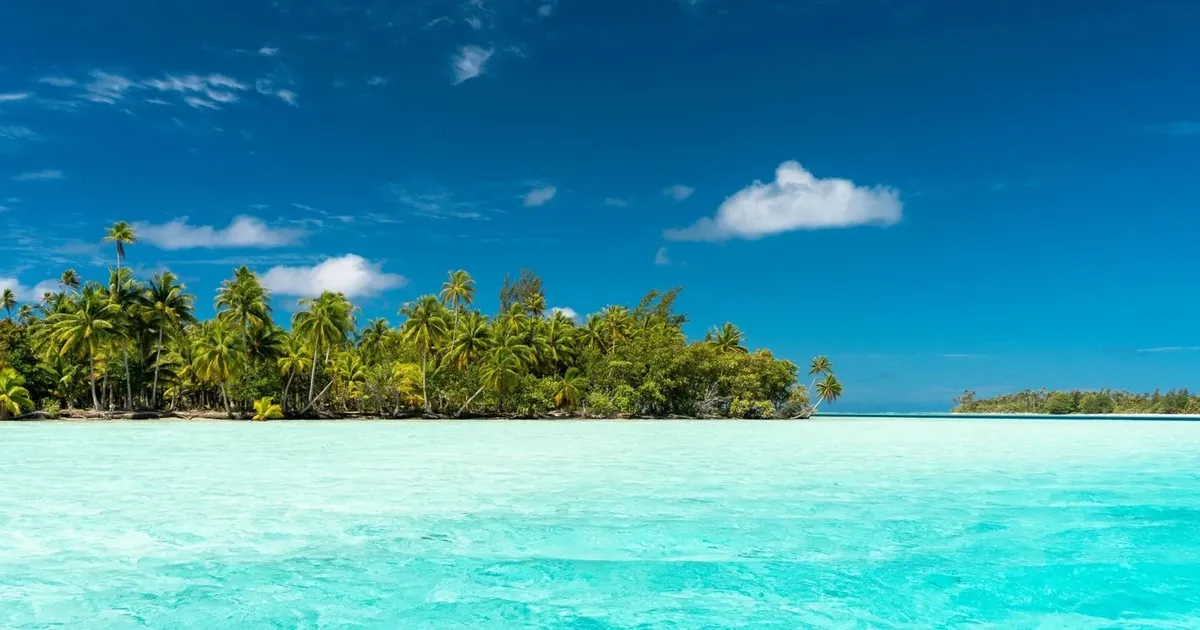
Moorea weather and seasons at a glance
Moorea has no cold season. From May to October the weather is drier and a little cooler; from November to April it is hotter, more humid and wetter, and the mountains turn a deep green. The difference you notice is rain, humidity and wind, not temperature.
| What you want | When to go | What to expect |
|---|---|---|
| The best all-round trip | September and October | Drier weather and whale tours running |
| The most comfortable weather | May to October | Lower humidity and less rain |
| Whale watching | August to October | The middle of the July 20 to November 20 tour window |
| Snorkeling | All year | Warm water; clarity depends on wind and rain |
| Lagoon boat trips | May to October | Usually settled, though wind still matters |
| Hiking and viewpoints | May to October | Drier, less slippery trails |
| Fewer visitors | May, early June and October | Fewer arrivals in French Polynesia than in July (2025) |
| Lower room rates | November to April, outside the holidays | Low season, with deals possible |
| The warmest sea | January to April | About 29°C (84°F) |
| The greenest scenery | November to April | Lush valleys and frequent showers |
Tahiti Tourisme gives May to October as the dry season and November to April as the wet one. It names July and August as the peak of demand and November to March as the low season.
Other Experiences
Other experiences you might enjoy
More Moorea whale and lagoon tours, each with its own page and booking link.
Moorea weather by month
These are Tahiti Tourisme’s monthly averages for the Islands of Tahiti, not a Moorea weather station or a forecast for a given year.
| Month | Average high | Average low | Sea | Whale tours |
|---|---|---|---|---|
| January | 31°C (88°F) | 24°C (75°F) | 29°C (84°F) | No |
| February | 31°C (88°F) | 24°C (75°F) | 29°C (84°F) | No |
| March | 32°C (90°F) | 25°C (77°F) | 29°C (84°F) | No |
| April | 32°C (90°F) | 24°C (75°F) | 29°C (84°F) | No |
| May | 31°C (88°F) | 23°C (73°F) | 28°C (82°F) | No |
| June | 30°C (86°F) | 22°C (72°F) | 28°C (82°F) | No |
| July | 29°C (84°F) | 22°C (72°F) | 27°C (81°F) | From July 20 |
| August | 29°C (84°F) | 22°C (72°F) | 27°C (81°F) | Yes |
| September | 30°C (86°F) | 22°C (72°F) | 27°C (81°F) | Yes |
| October | 30°C (86°F) | 23°C (73°F) | 27°C (81°F) | Yes |
| November | 31°C (88°F) | 24°C (75°F) | 28°C (82°F) | Until November 20 |
| December | 31°C (88°F) | 24°C (75°F) | 28°C (82°F) | No |
The coolest nights, around 22°C (72°F), come from June to September. Even then, most people swim without a wetsuit in the lagoon.
The dry season: May to October
This is the classic time to visit. Days are often sunnier, the air is less sticky, and outdoor plans are easier to keep. It suits sightseeing, hiking, beaches and lagoon trips.
Dry does not mean rainless. Moorea’s mountains catch passing cloud, so it can be sunny on one coast while showers sit over the interior. The trade winds also pick up in these months. The mara’amu, a strong, cool southeast wind, can raise a rough sea outside the reef even when the lagoon looks calm, so a blue sky doesn’t promise a smooth whale trip.
For a first visit, the dry season is the safest choice if weather matters most to you.
The wet season: November to April
The wet months show a different Moorea. The island is intensely green, the air is hotter and more humid, and showers send mist and short-lived waterfalls down the mountains.
Rain rarely lasts all day. You can have sun, a downpour and sun again in one afternoon, but longer spells of heavy rain do happen. Snorkeling and lagoon tours still run when conditions allow, and the sea is a degree or two warmer than in the dry season. The cost is less predictable weather, which matters most on a short stay.
Tropical cyclones are possible in French Polynesia in the hot season. Météo-France Polynésie runs the official warning system, so check meteo.pf if a storm is forecast while you are there.
Best time to visit Moorea month by month
January: hot, humid and green. One of the wetter months, with the sea at about 29°C. Good for a relaxed resort stay if you don’t mind working around showers. The Christmas and New Year rush can last into early January.
February: warm water, changeable weather. Hot and humid, with a fair chance of heavy showers. Stay a few days longer so you can pick the better days for snorkeling and boat trips.
March: green hills and a quiet island. Still the wet season, warm, and part of the low season. Good for flexible travelers, though hiking trails get slippery after rain.
April: the change begins. Rain is still common, but the island is moving toward the dry season. A fair choice if you will trade some weather risk for a lower room rate.
May: a smart month to go. The dry season is underway, highs are around 31°C, and there are fewer visitors than in July and August. A strong choice for a first trip with beaches, snorkeling and island sightseeing.
June: comfortable for being active. Good for hiking, viewpoints and lagoon trips, with the coolest nights of the year starting. The sea can still be windy, and the high season starts to build.
July: busy, with whales from the 20th. The Heiva festival in Papeete brings dance and music in July, and demand peaks. Licensed whale tours start on July 20, but the early weeks are better for hearing singing males than for seeing mothers and calves.
August: whale season in full swing. Dry weather and growing whale numbers make August one of the busiest months. Rooms and the best boat departures fill early, especially in school holidays.
September: our first choice. Dry weather, whale tours with mothers and calves around, and a little less demand than in August. A good month to mix whale watching with snorkeling and sightseeing.
October: another strong month. Whale tours are still running, and the weather starts to turn as the wet season nears. Good if you want lagoon trips and a chance of humpbacks in one stay.
November: the season turns. Humidity rises, the rains begin and whale tours stop on November 20. Early November can still suit whale fans, depending on the sightings that year.
December: tropical heat and the holidays. Hotter, wetter and more humid. Moorea is still good for resorts, swimming and the lagoon, but the Christmas weeks are busy and expensive.
Best time for whale watching in Moorea
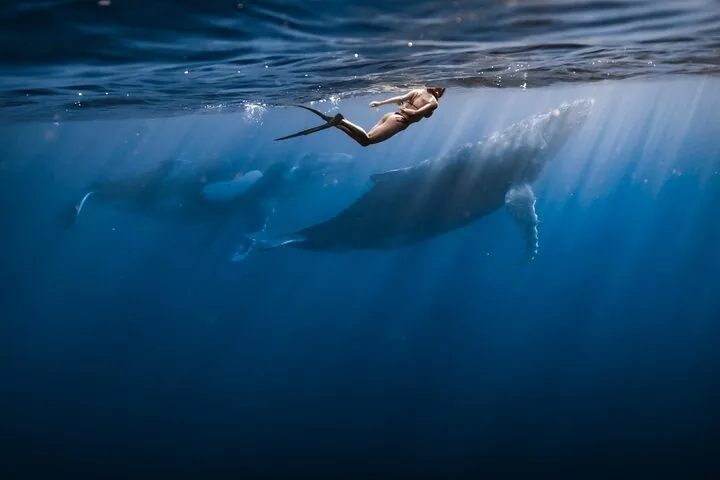
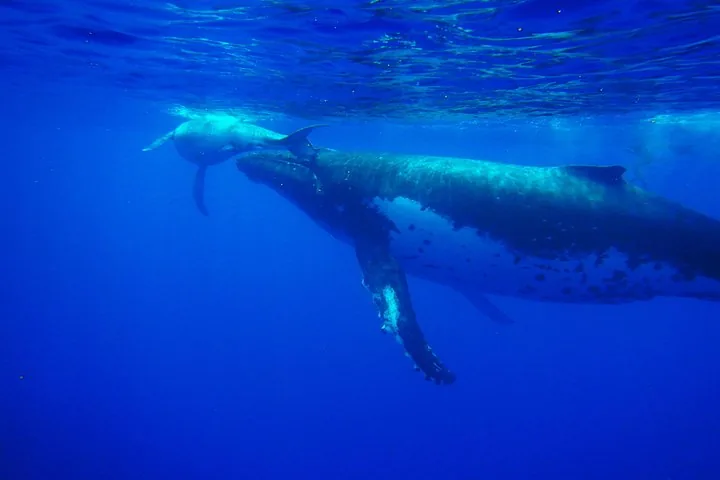
Humpback whales come to French Polynesia each southern winter to mate, give birth and nurse their calves. Licensed operators may take guests to watch or swim with them only from July 20 to November 20, and only between 7:30 a.m. and 5:30 p.m. That window is a legal limit, not a promise of whales on either end of it.
Within it, August to October is the middle of the season, well after the first whales arrive and before the wet season begins. If you can choose one month for whales and everything else, choose September.
The Moorea Sea Experience half-day small-group trip caps the boat at six guests and leaves from the Cook’s Bay public landing, from $254 per person (5.0 from 120+ reviews). Read our breakdown of the small-group trip, or compare every boat in which Moorea whale tour is right for you.
Whale watching month by month
Our guide to the best time to see whales in Moorea compares the months from the first tours on July 20 to the last on November 20, explains which trip time to book, and has a date checker that shows whether whale tours run on your date.
Important: whale swimming is regulated
French Polynesia’s rules set how close boats may come, how many swimmers may enter the water and when a swim must end. Book a licensed operator and ask whether your tour includes a swim and under what conditions. A tour described as swimming with whales is never a guaranteed chance to get in the water; it depends on the whales’ behavior and the sea. Our guide on how to swim with whales in Moorea explains the rules.
How many days should you allow for whale watching?
If whales are the reason for your trip, stay at least three or four nights on Moorea instead of coming for a day. That gives you room to rebook if wind or sea cancels a trip. Book your whale tour for the first half of your stay. Don’t count on several good encounters, though; no honest operator can promise a sighting.
Best time for snorkeling in Moorea
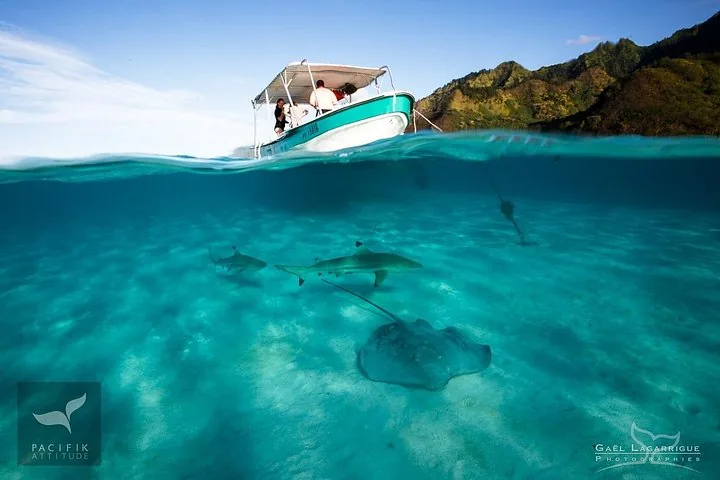
You don’t need whale season to snorkel. Moorea’s sheltered lagoon has reef fish, rays, blacktip reef sharks and turtles all year, and the sea stays between about 27 and 29°C (81 and 84°F) through the year, so swimming is comfortable in every month.
May to October: good all-round conditions
The dry season is our pick for a snorkeling trip. You can snorkel in the morning and sightsee in the afternoon, and less rain means less runoff clouding the water near streams and bays. The trade winds can still chop up the surface, so the calmest spot on a given day depends on the wind, the swell and the tide.
November to April: warmer water, less predictable conditions
The water is a degree or two warmer. Heavy rain can cloud the lagoon for a while near river mouths, and strong wind and swell can change boat trips. Many wet-season days are still beautiful; ask a local guide which part of the lagoon is best that day.
The Moorea Lagoon and Reef Snorkeling Tour with Drinks runs all year from Tiahura, spending four hours with reef sharks outside the reef, turtles in the lagoon and rays in the shallows, from $114 per person (4.9 from 190+ reviews).
Best snorkeling spots to consider
- Temae Beach: a white-sand beach on the northeast coast with lagoon swimming and snorkeling. Check the conditions first; some areas have current and shallow coral.
- Tiahura coral garden: a popular site off the northwest coast, usually reached by boat or guided kayak. The current can be strong, so go with a guide if you are unsure.
- The shark and ray sandbank: guided trips stop in shallow water where blacktip reef sharks and rays gather. Choose an operator that keeps a respectful distance.
Our guide to the best snorkeling in Moorea covers each spot in detail.
Best time for lagoon boat tours
Lagoon cruises are one of the best things to do on Moorea, in or out of whale season. Many combine a boat ride with snorkeling, a stop at a motu (a small islet on the reef) and time with sharks and rays. The dry season is usually more comfortable for a day on the water, but lagoon tours run all year when the weather allows. Our Moorea snorkeling tours page compares them.
Morning or afternoon?
For a snorkeling trip, choose a morning departure if you can. Mornings are often calmer before the afternoon breeze picks up, though it depends on the day. Afternoon trips suit sightseeing, photos and an easy cruise. For a sunset trip, check whether it includes snorkeling or is a scenic cruise only.
What happens when the weather is bad?
Operators may change the route, move to a more sheltered spot, delay or cancel. A good company puts sea conditions and safety ahead of a fixed itinerary. Before you book, check whether a weather cancellation gets you a refund, a credit or another departure.
Best time for hiking and island sightseeing
Moorea is not only about the sea. Its jagged mountains, green valleys and deep bays are some of the finest scenery in French Polynesia. Inland, visitors head for the Belvedere lookout, the Opunohu Valley, the pineapple fields and guided walks in the interior.
Best months: May to October
The dry season is better for hiking because trails are less muddy and slippery, and on Moorea a tropical downpour quickly turns a steep path or dirt track into mud. Showers can still form over the mountains in the dry season, so a clear beach does not mean a clear summit. For views, go to the lookouts earlier in the day and keep your plans loose in case of cloud.
Hiking during the wet season
Moorea is at its greenest in the wet months, and mist on the peaks is beautiful. Heavy rain makes paths slippery and raises the streams, though, so skip exposed mountain routes in unsettled weather and hire a local guide for the bigger trails. You can still reach many viewpoints by car.
When is Moorea cheapest to visit?
No month guarantees the lowest prices. Room rates depend on the property, the room, local events, demand and how early you book. The wet season outside the holidays usually costs less than the busiest dry-season weeks.
Seasonal price and crowd patterns
| Period | Demand | What it means for your budget |
|---|---|---|
| January to March | Quieter once the holidays end | Look for deals |
| April and May | Shoulder season | Good value for flexible travelers |
| June | Rising as the high season starts | A fair balance of weather and price |
| July and August | The busiest months | Book early |
| September and October | Strong demand from whale watchers | Good weather, not the cheapest |
| November | Low season begins | Compare rates |
| December | Holiday demand at year’s end | Christmas and New Year can be expensive |
A few ways to make the budget go further:
- Compare small guesthouses and family-run pensions with the big resorts.
- Check weekday and weekend rates.
- Stay outside the best-known resort areas if you will have a car.
- Add up the whole trip: transfers, ferry tickets, meals and tours.
- Book a good whale departure before you commit to a non-refundable plan.
Our value pick: May or June, if whales are not a must.
Is Moorea worth visiting during the rainy season?
Yes, if you accept the trade-offs. Between November and April the interior is at its greenest, the water is warmest, and some rooms cost less outside the holiday peaks. The drawback is uncertainty. With one or two days on Moorea, a spell of heavy rain can take a big part of your visit; with a week, you have more chances to fit trips around the better days.
What can you do in Moorea when it rains?
Visit Te Fare Natura, the ecomuseum of Moorea’s reef and lagoon life in Papetoai, taste local juices and jams, take a long lunch, book a spa treatment or browse local crafts.
If you plan to snorkel in light rain, the rain itself is rarely the problem. Wind, lightning, current and poor visibility matter more. Never get in the water during lightning or rough conditions.
Best time to visit Moorea for couples and honeymoons
For a honeymoon, pick May, June, September or October. These months pair good weather with a chance of missing the busiest holiday weeks. May and June suit a trip about relaxing, snorkeling, scenic tours and dinners outside; September and October are better if you want whale watching too.
If you have your heart set on an overwater bungalow, choose the room and view first, then compare rates across several dates; averages can’t tell you which week is cheapest. Our guide to the best areas and hotels in Moorea compares the three overwater resorts. Moorea’s mountains are as much of a draw as its lagoon, and a hillside or beachfront room with a view can make a more memorable stay than a bungalow that strains your budget.
Best time to visit Moorea with children
For a family trip, May to October has the best weather, though December and January may fit school calendars better. The water is warm and the ferry from Tahiti is short, which makes Moorea easy with children.
Lagoon trips are a highlight, but check the minimum age, swimming requirements, shade and life jackets before you book. In July and August, book popular activities early. Whale trips go into the open ocean, which can be uncomfortable for very young children, so a lagoon tour is the gentler wildlife option for little ones.
What to pack for Moorea in each season
For May to October
Light clothes, swimwear, sun protection, sandals and a light layer for boat trips. A thin windproof jacket helps after a swim or on a fast boat.
For November to April
Add a packable rain jacket, quick-drying clothes and a waterproof bag for your phone and camera. Cotton feels heavy in the humidity, so pack breathable fabrics.
For whale watching
Polarized sunglasses, a hat that won’t blow off, reef-safe sunscreen and a warm layer for the ride back. If your tour includes a swim, ask whether wetsuits and snorkel gear are provided. The open ocean feels cooler than the shallow lagoon, and a long time floating at the surface can leave you chilled.
Frequently asked questions
What is the best month to visit Moorea?
September. It falls in the drier season and in the whale tour window, which runs from July 20 to November 20. May and June are good choices if you don’t need to see whales.
When is Moorea’s dry season?
From May to October, although it can rain in any month.
When is Moorea’s rainy season?
From November to April, when it is hotter and more humid. Rainfall varies by year and by side of the island.
When can you see whales in Moorea?
Licensed whale tours run from July 20 to November 20, and August to October is the main part of the season. Sightings are never guaranteed. See the best time to see whales in Moorea for the season month by month.
Is September a good month to visit Moorea?
Yes. It pairs dry weather, a sea of about 27°C (81°F) and whale tours running.
Is October too rainy for Moorea?
Usually not. October is still in the dry season, though the weather gets more changeable as November nears.
Is December a bad time to visit Moorea?
Not necessarily. It is hotter and wetter, and holiday demand can push up room rates, but it still works for a resort stay and the lagoon if you can be flexible.
Can you snorkel in Moorea all year?
Yes, whenever the sea and weather are safe. The water stays warm all year.
What is the water temperature in Moorea?
Tahiti Tourisme’s monthly averages run from about 27°C (81°F) from July to October to 29°C (84°F) from January to April.
What is the hottest month in Moorea?
March and April, with average highs of about 32°C (90°F). January to April is the hottest stretch of the year.
Is Moorea very crowded?
Moorea feels relaxed next to most big tropical destinations, but rooms and tours get busy in July and August and over Christmas and New Year.
How many days should you spend in Moorea?
Three to five nights covers beaches, snorkeling, an island tour and some rest. Stay longer if whale watching matters and you want room for weather cancellations.
What is the best time to visit both Tahiti and Moorea?
May to October suits both islands. Go in September or October if you want whale watching too. The Tahiti to Moorea ferry takes about 25 to 45 minutes, so moving between them is easy.
Choose May or June for good weather, snorkeling and hiking without whales. Choose September or October for dry weather and humpbacks in one trip. Choose November to April if your dates are flexible and you like a green, warm island and can plan around the rain. Then compare boats in which Moorea whale tour is right for you or lagoon trips on our Moorea snorkeling tours page, and read the Moorea island travel guide for the rest of your plans.
Look for Humpbacks With Six Guests on Board
Free cancellation up to 24 hours before. Moorea Half-Day Small-Group Whale Watching (6 Guests) from $254 per person.
Check Availability & Book